Featured Projects
Podcast
Episode 1: With Julia Figueras and Derrick Skye
Julia Figueras: Welcome to Voices of Today, a podcast of the Rochester Philharmonic Orchestra. I'm Julia Figueras. How do you answer a masterpiece? Composer Derrick Skye has done it once already with A Rage of Peace, written for the Rochester Philharmonic Orchestra as a pendant to Brahms Requiem. His next assignment, a companion piece to Beethoven's Ninth. Where to begin? Let's find out. Welcome, Derrick.
Derrick Skye: Thank you. Thank you for having me. Happy to be here.
Julia Figueras: Faced with the daunting task of answering a masterpiece, where do you start? The words? The music?
Derrick Skye: Well, first I start with what it feels like to hear that piece. That, I mean, Beethoven's Ninth is something that I've listened to that piece my whole life. I mean, I suppose many other classical enthusiasts have also been listening to that piece their whole life. And so I always start with, well, what does that piece make me feel like even today since the first time that I heard it and it's always just a, it's a pure sense of joy. And if joy was an object that you could turn and look at through in different ways, that's what it would be like. Different perspectives and different ways of feeling joy. You mainly just start from there and say, okay, well, the piece that I want to do is to conjure that kind of, just that pursuit of super joy, and so that's where I, that's where I started.
Julia Figueras: Okay. So let's talk a little bit about the Rage of Peace that the work that you did with Brahms for Brahms Requiem, you used a poem by your sister Kiera as a basis of your text. Was the poem which she wrote, A Clenched Dream Never Speaks, written for that occasion specifically?
Derrick Skye: Yes it was. I actually commissioned her to write text for the topic that I had picked. That was kind of parallel to the kind of feelings that Brahms was thinking about when he was writing that piece.
Julia Figueras: You redacted it. You plucked out words and phrases to highlight throughout the piece. Did you do that along with Kiara or was that all your own doing?
Derrick Skye: That was all my own doing. Yeah, that was all my own doing. And I told her I was going to do that before she wrote it. But then, of course, the other side of that is the poem and in its entirety, of course, is in the score. And I usually suggest people put it in the.
Julia Figueras: Yeah. How did she react to how you used her poem?
Derrick Skye: Yeah, well, she loved the first part because it was pretty clear. The first two lines were pretty clearly sung like outright. She's like, oh, that's it. And then the rest of it was like, well, it kind of went away from her poem because it was more about like this kind of constant unfolding and, of like, these words. And but the reason why I do that is because then you end up having like three dimensional text where you can get multiple meanings for different people that hear different things as things kind of churn and are broken apart and put assembled back together. It's almost like Legos but in real time.
Julia Figueras: So is Kiara supplying the text for your new piece.
Derrick Skye: Kiara is supplying the text for the new piece, and this time I'll actually be doing mostly just what she wrote. So she's very happy about that.
Julia Figueras: I'm sure she is. So what was the essence of the Brahms Requiem that you were embracing as you wrote "A Rage of Peace"?
Derrick Skye: Brahms obviously Brahms had like, some, he was really taken aback by the death of his mother. And one of the things that I was thinking about when I also when I commissioned Kiara to write the poem was this sense of, like, mentorship. And I didn't want it to be like someone's biological parent, because a lot of times people don't have good relationships with their biological parents. But there is some other parental figure, some other mentor that helps them get through portions of their life. And so I wanted to write this piece as if it was something that could like resonate with the full scope of people who get who give guidance to others, whether they're your biological parent or not. And when you look at Brahms Requiem and you look at some of the text of Brahms Requiem coming from the Bible and these kinds of things, it's there. The text is referencing a higher power, a guidance from a higher power. However, it never, and because of the religious connotations to it, it says he because of the God in the Bible is often referred to as He, but the essence of it was guidance from others on how to kind of maneuver through life. And then it kind of went through all of these like, you know, these portions of the human experience.
Derrick Skye: The text that Kiara wrote is kind of like an updated version. I would say updated because it's obviously it's not genderizing the, the guide, the guider. The guide rather, sorry. It's not genderizing the guide. And so then it really leaves the guide to be to be anyone, including a parent.
Julia Figueras: So now you have "Joy". Have you already seen the poem by Kiara?
Derrick Skye: I have, I'm looking at it now! I pulled it up right here for this interview because it's awesome.
Julia Figueras: Did you want to share some of it with us?
Derrick Skye: Sure. I have to be careful, though, because sometimes she will write things where like it needs to be read in a certain way. So I would say that, that I'm going to read some of it as I read it, but that also may not be exactly the way that she would want to hear it. So I just want to make sure that that's stated so that we can respect her art as well.
In the 21st century
a bullet might shove your future
outside of you
so all that remains is the past,
a photo of your last smile,
and the prayers,
they frame your name with.
I soak myself in the thought,
What is joy in the pursuit of happiness?
If today my present is stolen
and everything about me
is past tense.
I want my echo to sing
that I sipped more joy than caution,
that fear never suffocated my tomorrow,
that I made happiness from instability
and kept my hands open with kindness
instead of filled with anger.
I didn’t wait to find nirvana
I pulled the stars towards me.
I was never disillusioned
that the end
is what made the story
it was always
everything leading up to it.
The truth is
the pursuit
is where the joy is.
That's the whole poem.
Julia Figueras: I love that the pursuit is where the joy is, more joy than passion. It's a wonderful way to consider joy, because joy can be a very fleeting thing. Finding that essence of joy and holding on to it is what becomes very difficult.
Derrick Skye: Absolutely. Yeah, absolutely. And, there's a balance to the poem too, because the other thing is, is if the poem becomes too like meta, where, where you're just talking about joy purely and just, oh, it almost seems like a kumbaya situation, then there's so much fluff that it doesn't matter, right? Like it's like, oh, well, I, you know, you just if you eat chocolate every day, all the time, it just won't taste as good! So I felt like she really had a really good balance in the poem. And it's really going to allow for some super cool flexibility in the piece. I've actually started the piece already.
Julia Figueras: So when you start a piece, how do you do that? Do you mull it over for a while? Do you dive right in?
Derrick Skye: Oh, I dive right in. Well, I mull it over and then dive right in, so I've been thinking about the piece ever since they asked me to do it because like, how can you I mean, it's the Beethoven's Ninth. Well, what are you going to do? And they're not going to give me the choir, so I have the four soloists and the orchestra, and it's me versus Beethoven with the four soloists and the orchestra. So, I yeah, I was definitely mulling it over for quite some time. And then when I started, I just kind of started off. I started off with a bang. I just like, okay, well, let's rock and roll. And this is going to be fun. Yeah.
Julia Figueras: A lot of Beethoven's Ninth is about seeking and seeking joy, seeking perfection, seeking that perfect note. And I find that Kiara's poem has a bit of that in it as well. The idea of seeking joy trying to reach that moment.
Derrick Skye: Yeah, absolutely. That's definitely what she's going for. And then it's also it's that pursuit. It's the seeking. That's where the joy is. It's almost like you're going to get somewhere. And that's where most of the joy, because once you have it, you're like, oh, okay. But then the journey is complete, right? And then, in Beethoven's music, there's this kind of pursuit to that last, oh, man, that last few minutes of that piece is just a wild party. And this is the other amazing thing about, like, Beethoven and a lot of music from that era, it's got really good rhythms, really, really awesome rhythms. I mean, *Vocalizing Rhythms*. Oh my goodness, I love that movement. It's so annoying for, I'm sure for the musicians because it's just like*Vocalizing Rhythms* for 20 years. But like I love that movement so much. It's just that, man, he knows how to groove. Beethoven knew how to groove.
Julia Figueras: You use rhythm a lot as well. One of my favorite parts of A Rage of Peace is when the handclaps start, and there's that great sense of rhythm, and that rhythm that you use comes from all kinds of cultural sources. You're digging deep into your background. Did you actually take a moment to study the music of your heritage, to bring that into the music that you write?
Derrick Skye: 100%. I continue. I started studying in 2003, and I have continued to study music of West Africa, music of North Africa, music of the Balkans, Persian classical music, Gamelan, Indonesian classical music and Indian classical music. These are lifelong studies that I do and I, well, along with classical music. Western classical music. But these are all things like to me in my head, like, everything tangles together and everything works together. I think sometimes I think we all wish that it was that easy in real life for us to work together, and be harmonious together. But yeah, these are definitely musical practices that I've studied and continue to study extensively. Because they just make me feel good.
Julia Figueras: What was the moment of inspiration when you said, I have to go here? This is my musical compositional future. This is what I have to do.
Derrick Skye: I was a serious, serious, like, consumer of listening to music when I was a kid across multiple genres and eras. I, I think I don't, I don't even, I even wonder if people I was kind of crazy because I would find field recordings, ethnomusicological field recordings of some tribes somewhere, some in some part of the world. And I'd be listening to that. And then I'd turn on KUSC in Los Angeles and listen to some classical music and then listen to some pop music. So and for me, I was, I can always find like these through lines and I'd always be wondering, well, oh, wow, this kind of can be tethered together because there's this connection here, there's this through line. And then outside of music, I would look out, as we all do, and I would see the chaos of just human interaction between cultures, and the passion for me to do what I'm doing in music is because I know that cultures can work together through music making, through their sounds. I know they can work together. We hope that they can do that politically in real life. Like outside of, you know, the sounds. But the passion is, well, I'm going to keep getting them to work together in my music because I know I can figure that out.
Derrick Skye: And then hopefully that will just encourage, continue to encourage other people when they come to see these shows. There's this especially here in the United States, there's so many different people from so many different parts of the world that they come together and they listen to my music and everybody can find something in the music, or as many people as possible can find something in the music that they can personally, personally relate to. It resonates with them on a personal level. And then, yet somebody else sitting next to them also hears the same thing, and somebody sitting next to them hears it. But these different people are from different areas of the world. And so that's what I strive to do, like with my pieces and over and over and over again just really getting at that. Like, is there a universal language in music? I don't know, there certainly isn't a universal kind of awareness of music because some people have different tuning systems, you know. But I love to search for that universal language of music in which everybody can really feel and understand on a really deep personal cultural level.
Julia Figueras: Because there are universal emotions. You're building a bridge.
Derrick Skye: Exactly. Yeah.
Julia Figueras: You're creating something that we can all walk across. We might all have a different takeaway when we get to the other side of that bridge.
Derrick Skye: Absolutely.
Julia Figueras: Yeah, but it's the journey across the bridge that you want us to take.
Derrick Skye: Oh, yeah. Yeah. Hand in hand, if we can.
Julia Figueras: Is it difficult for you as a person, when the world blows up like we're seeing in the Middle East now, is it difficult for you as a person to try to grasp this failure to walk across a bridge together
Derrick Skye: Yeah, I mean, it definitely is. I think what's more frustrating is when you know what the solution is, that would take a lot of forgiveness. And it's hard to it's really, really hard to ask people to forgive other people for things that have hurt them very badly. And I think that, there's a real frustration with that. But the catharsis is, well, if I can just get these things to work together in the sound, then at least I know that it's possible because people can make these sounds. Music is attached to people, obviously. And if the music can work and it's attached to people, there's still some chance that the people can get it together too. There's still some chance.
Julia Figueras: It's interesting that you say music is attached to people because your job as a composer is essentially a solitary job. You're sitting in a room and creating by yourself for the most part. Right?
Derrick Skye: Well, for the most part. But I mean, I also always test things out on my friends, you know? So, like, I still reach out to people and ask them to play something or, you know, hear something some certain way, or have someone play something. And then I record, like the little four bars so I could take it, put it over something else to see how it works. So there's it's still a collaborative effort, but a lot of it is done. Yes. At home, me at my desk in my studio. But I'm always reaching out, and I always like to talk to people about it. And then, of course, I always like to call my wife in and have her listen to a couple of things. And then I observe her while she's listening to see when she looks at her watch and looks. And I know I have to change that part. Yeah. So yeah. So, it is a bit of a you know a lonely journey to a certain extent, but I like to do my best to always keep a lot of people involved.
Julia Figueras: You take those four bars, you play them for friends, and you really like those four bars. Your friends are like, I'm not quite so sure. Will you take those four bars and sort of put them in a jewelry box in the corner and use them someplace else at a different time.
Derrick Skye: Always, always. I've got a big old pile of things that didn't work for one thing, but might work for something else. And it's proven to be true because I have pulled stuff out of the box like five, six, seven years later and it didn't fit then, but it fits now, and I'm like "aha!". So I've definitely have all kinds of stuff that's like on the cutting room floor that could still be used for other things.
Julia Figueras: So how many projects do you have running right now?
Derrick Skye: Oof, that's a, I think five, five or six. And they go off into 2026, something like that. Yeah, I'm about almost 2027. Yeah.
Julia Figueras: I think people forget you're on deadline. So what happens if you get blocked and you're on deadline? How do you get around that problem?
Derrick Skye: That's a very, very good question. And a lot of times my students ask me this question too. I rarely get writer's block. I don't even know that I well, most of the time, the way that I define writer's block for myself is I define it as boredom. I feel like I've done what I've wanted to do and I'm bored. And so like, well, what do I do now? And so a lot of times when I when that happens, this usually that's a symptom of not listening to enough. And when I say listening, I mean like being an active listener of not just music, but just the world around you. Like, there's, like, there's so much sound everywhere at all times. And most of the time, people aren't consciously listening to everything because it would overload your brain to process the entire world as it happens. But you can pick moments in the day to kind of focus on different things and just like, listen to the world. And I've often found that when I get bored and I get writer's block, I need to do more listening. And so that's what I do. And it usually gets me out of there really quick.
Julia Figueras: So you absorb more stimulation?
Derrick Skye: Absolutely.
Julia Figueras: To push you forward?
Derrick Skye: Absolutely. Yeah. And I do a lot of playing like this is the other thing I think that, you know, as much as Beethoven was a composer, he played the piano. He was a performer. He was a player. And I think I well, I can't speak for a lot of other composers, but many of the composers that I know are also musicians, like, you know, playing musicians, performing musicians. And that's also another remedy for writer's block is being able to improvise. You sit down and you just, you know, you just start going, and it’s, I think sometimes people will get bored because they think that they're doing the same thing. But then the reality is, if it sounds somewhat tethered to what you've done before, that's also like your style, like your voice, and you don't need to run from that. You just need to play with it. Right. So that's the other cool thing about that.
Julia Figueras: Have you shown anybody anything or are you just going to deliver this to the RPO complete and say, there you go.
Derrick Skye: No. Well, I'll probably be doing something close to that. What'll happen is, usually when I start getting towards the, home straightaway, I'll like, you know, send Andreas some stuff or you know, just kind of start putting feelers out, poking around, and, you know, I'll play it for my wife, the whole thing, and, you know, see her reactions to it and.
Julia Figueras: See if she checks her watch.
Derrick Skye: That's right. I see she's looking at that watch that I know that whatever part that was, there needs to be a change made.
Julia Figueras: Have you come up with a title yet?
Derrick Skye: No. Not yet. No, not yet. It's really difficult to come up with, titles usually end up coming last. Yeah, they usually end up coming last because I just, Yeah, I don't they, they usually come in. I mean, the cool thing with this one is I've got Kiara's text, so it's like, makes it it almost makes it easier to write the music because I can see the text and I'm singing the parts and I'm like, oh, yeah, well, it's, you know but yeah, I think that, yeah, I'm probably not going to have a title until the end, although I'm very excited to hear the end once I get there.
Julia Figueras: How do you know when you hit the end? Do you know? Does it tell you?
Derrick Skye: Well, I mean, it does kind of tell me. It does tell me that it's time. But then I'm also looking at the clock and I'm also like, okay, we're approaching 20, 25 minutes here. It's time to put the exclamation point on this thing, you know. So yeah. So there's also that.
Julia Figueras: That's so funny because you think we don't think about this as high art. And when I would be programming a radio show, for example, and someone would say, what a great show, it would surprise them to hear that I'm looking at the clock and thinking, okay, I have ten minutes to fill now, what can I get that works here? I mean, there's kind of a mathematical thing that has to happen in the midst of all of this art.
Derrick Skye: Oh, yeah. Yeah, I'm accompanying Beethoven's nine, but I can't be Beethoven nine length, like that would be a really long concert! So yeah, you know, so I also have my cutoff point that I have to adhere to so that tends to also bring about the end when it needs to be brought about.
Julia Figueras: So you're just starting this journey, Derrick, and we're going to follow you on this journey. Voices of Today will be checking back with you to see how it's going as you journey with this untitled piece. That companion piece to Beethoven's Ninth for the Rochester Philharmonic Orchestra progresses. So I hope to hear that you have something done the next time we talk to you.
Derrick Skye: Oh, yeah. No, I'm about like two, two or three solid minutes in that I'm like, I'm committed to those. And often what happens is, the DNA of the piece comes like the basic building blocks of the piece will come through like the first five minutes, the first 5 to 7 minutes, and then the rest of the piece, you're just taking these what happened in the first five minutes and you're like, you're shaping them. And one of the things that I'm looking forward to doing in this piece is and, in "Rage of Peace" I brought the soprano in very soon after the beginning of the piece, but in Beethoven's Ninth, he doesn't bring the choir until the fourth movement. He didn't bring any voices in until the fourth movement. And so I wanted to actually not bring the vocalists in until the, after the ten minute mark. After the ten minute mark, I'm going to bring the voices in and we're just going to party all the way to the end. But I wanted to set everything up without the voices. It's just like Beethoven. Because just like Beethoven did. Because I just thought. I just thought, that's so clever. It's like you literally just save, like, the man, the pure dessert. We're going to save that till later. So I'd like to, that's my goal right now is I'm working my way through the first ten minutes, first ten to twelve minutes. And then when I bring those voices in, it's going to be a party. It's going to be great.
Julia Figueras: You look forward to hearing how the party is developing. We'll be talking to you again a little bit later on in the process, to find out how your party of joy is shaping up. Derrick Skye, thank you so much for sitting down with us this morning and having a chat about this. This mystery titled piece written for the Rochester Philharmonic Orchestra. Looking forward to seeing you again.
Derrick Skye: Yeah. Thank you so much, Julia. Great to see you again.
Julia Figueras: I'll talk to you soon. I'm Julia Figueras. Voices of the day is a production of the Rochester Philharmonic Orchestra.
Episode 2: With Julia Figueras, Derrick Skye, and Kiara Skye
Julia Figueras: Welcome to Voices of Today, a podcast for the Rochester Philharmonic Orchestra. I'm Julia Figueras. Today we extend our conversation with composer Derrick Skye discussing his companion piece to Beethoven's Ninth for the RPO. And joining Derrick is his sister, poet Kiara Skye, who wrote the libretto for the piece. Welcome, Derrick, and welcome, Kiara. Nice to have you here.
Kiara Skye: Thank you.
Derrick Skye: Thanks. Happy to be here.
Julia Figueras: Derrick. When we last spoke, you had begun to work on your new piece for the RPO. How's it going?
Derrick Skye: It's going good. I am in the thick of it. Probably about 70% of the way through.
Julia Figueras: Have you come up with a working title yet?
Derrick Skye: Not yet. I know you asked me that before. I'm still working on that. I've got like… I've got some concepts, but it's just like, you know, a title is so important these days and I can't, I sometimes I really wish that like, I could just be like, oh, it's symphony number one, you know, or something like that. But you know, these days, people kind of want this. It needs to be a little bit more story in a title, you know, a little bit more a little bit more programmatic texture to the, to a title. So I'm working my way through it.
Julia Figueras: You used your sister's poem. A clenched dream never speaks for the basis of "A Rage of Peace". Why did you choose her poem, then?
Derrick Skye: Yeah. Well, I have always known my sister to be a poet. I'm also a poet, but I'm not a poet the way she is a poet. She focuses on that stuff way more than I do. And I've always enjoyed her poems, and I've always wanted to create music using some of her words because they're just great.
Derrick Skye: It's just a great poem. She's a great poet. And you know, any opportunities to collaborate with my sister? I'm going to take it.
Julia Figueras: And of course, a new opportunity has arisen for you. Kiara. What did you think the first time you heard A Rage of Peace? What were your thoughts on the completed work?
Kiara Skye: It's kind of surreal to have your words intertwined with musical work. I had never really heard that or knew what could be achieved by putting poetry together. With music, to be quite honest. So I think the entire experience was surreal. The piece is beautiful to have a part in. It just feels like amazing.
Julia Figueras: At this time around. Unlike "A Rage of Peace". Derrick, you're using Kiara's entire poem, correct, for this work?
Derrick Skye: That's correct. This time. The last time I used the whole poem, but I broke it into like little chunks as I went through the piece. But then this time I'm going to actually go through her poem and its entirety and then break it and move things, move things around. But it'll be very like the whole poem will be very clear and direct, first out, first out the gate when it comes in.
Julia Figueras: So you said in our previous chat that you use the concept of joy as your inspiration for this new piece you're writing for the RPO. So, Kiara, I turn that around and ask you, what did that concept of joy mean to you?
Kiara Skye: For me, I think the first thing I leapt to was defining joy and defining happiness. Are they one thing or are they two separate things? And the conclusion I came to is they're two separate things, happiness being something that's the, the result of maybe some actions you take or a goal you're working to achieve. For example, as simple as I wanted to get a cookie, I went and got a cookie, and now I'm happy I'm eating this delicious cookie. Where joy, I decided to perceive it after researching as something more of a state of mind. Choosing to find joy in things even when it cannot always be joyful. Wanting to hold on to that state of mind. And I wrote that my poem with that in mind.
Julia Figueras: So, having said that, I was hoping that you could take a moment to share that poem with us.
Kiara Skye: Yeah, definitely.
Julia Figueras: Thank you.
Kiara Skye: No problem.
In the 21st century
a bullet might shove your future
outside of you
so all that remains is the past,
a photo of your last smile,
and the prayers,
they frame your name with.
I soak myself in the thought,
What is joy in the pursuit of happiness?
If today my present is stolen
and everything about me
is past tense.
I want my echo to sing
that I sipped more joy than caution,
that fear never suffocated my tomorrow,
that I made happiness from instability
and kept my hands open with kindness
instead of filled with anger.
I didn’t wait to find nirvana
I pulled the stars towards me.
I was never disillusioned
that the end
is what made the story
it was always
everything leading up to it.
The truth is
the pursuit
is where the joy is.
Thank you.
Derrick Skye: I told you, Julia. I told you that was better than the way I read it!
Julia Figueras: I love that line. That fear never suffocated my tomorrow. That idea of moving forward fearlessly to find your joy. Find your happiness.
Kiara Skye: Thank you. I think it's important. Like, there's so many things that can be difficult about the world, that having the ability or learning how to find joy through difficult things is such a powerful, I think, skill that one can get.
Julia Figueras: When Ernest Hemingway was asked how to write a novel, he said, first you defrost the refrigerator. So how do you start?
Kiara Skye: I think the first thing I think of is write what you know, write what you experience. Write truly what you think, and try to be as unafraid as possible about what people might think of that. Because if you write what you know, I think there's something magical, and real words and real experiences will come out which make the poem more relatable to an individual who's reading it, rather than trying to make up something you've never experienced, really.
Julia Figueras: Is your physical environment important to you when you write, Kiara?
Kiara Skye: Yes. I like it to be quiet, but I think it's how I choose to write. For example, all poems, I always start, it starts in a book or like notebook. I've been writing since I was, gosh, maybe in elementary school, a teacher told me if you have difficult feelings, write it down. And I have always, like, handwritten it down. And now I cannot start any other poem without handwriting it down. If I'm stuck, I've got to write it down. If I started on the computer, I've got to start over and write it down. That I feel like is probably more important to me than the environment, because sometimes you can be writing anywhere sitting in an airport, sitting in an airplane.
Julia Figueras: Derrick and I talked about the idea that sometimes he gets a great groove or a really good phrase, but it's not right for the piece. So he sets it aside in a little box and comes back to it. Does that happen with you, with your poetry, that you come up with something and say…
Kiara Skye: Yeah, all the time, Sometimes I will just write descriptions of what I see or what I hear, or maybe what something smells like. I think it's just fun, to be quite honest, to have like, a little book of little short musings. And then sometimes I'll go back and that little short musing will seem so much bigger than it was when I first wrote it, and I'll be able to kind of pull a piece together from there. And sometimes I start a piece and it's like I'm knitting it a little bit at a time. I'll write a little section, take a little time off, come back and write another section until the piece is done.
Julia Figueras: So are you that person that always has a little book in her back pocket, under her arm, in a purse, somewhere.
Kiara Skye: Somewhere. There's always some type of notebook. Always. So you never know what you're going to experience or what feelings you're going to have.
Julia Figueras: Do you have that notebook too, Derrick?
Derrick Skye: I have it all right here and on my phone. That's where my notebook is. Because what happens is, there's not even really any, you know, a time to, like, write. So I just record. I record myself singing on my phone. Like all the time. I'll be on a walk. I was actually on a walk yesterday, and something came to mind that I was going to add into the piece, and I opened the recording app and just started singing it in, and then I came back later and started putting it into the piece. So.
Julia Figueras: So let's talk about this collaboration and putting Kiara's words to music. Is that what comes first? Is it the words? Is it the music? How does that work between the two of you?
Derrick Skye: Yeah. So this time I think, this time it was a, it actually, the genesis of it was starting from Beethoven nine and the poem that goes with Beethoven nine. And we were kind of thinking about the concept, the philosophy of Beethoven nine really wanting to bring people together and celebrate, everybody kind of celebrating this togetherness. And we took a contemporary perspective on that. We had a long conversation about it. Kiara started writing the poem. I started writing the piece, but we were kind of doing both things at the same time. For the first part of the composing process, both things were kind of being done at once. And then I was probably about 5 or 6 minutes through the beginning of the piece, and then Kiara gave me the poem, and then I was really able to get going on the piece, because I could use the poem as the inspiration for a bunch of the stuff in the piece.
Julia Figueras: So, Kiara, I'm assuming you sat down and gave Beethoven's Ninth a good listen or two or ten.
Kiara Skye: I did.
Julia Figueras: What was your takeaway?
Kiara Skye: Man, how do you summarize that the grandeur and the journey that he takes you through is so intensely felt through the music, and then understanding how he viewed poems, how life was during that period of time, I don't know, gives even more richness to the music. That was my experience.
Julia Figueras: Yeah, it's an extraordinary piece. And back in the day when we would poll the audience, what is your favorite piece? Invariably, Beethoven's Ninth would be in the top three! What is it about Beethoven's Ninth that seems to be so universal?
Derrick Skye: It's because he was able to balance. Technically he was able to balance the complex and the simple all in the same piece. And that's just something that rarely people seem to be able to do. With a, I guess with a context in which you can walk away singing yourself the simplistic aspects of the piece while also remembering the complex aspects of the piece. And so what he did was he created a very holistic experience. That peace is a very holistic experience, and holistic experiences stay with people for life. And so, I mean, that's been my takeaway from that piece. When, when Kiara is saying that it takes you on a journey, a story, an auditory story. Like that's totally what happens when you go through that piece. It's like watching a movie with your ears. And then the fact that he saved the choir for pretty much the last, I don't know, probably last 15 minutes or so of an hour long piece, is, I thought that it's extraordinary. It's great. Like, there's this whole journey to get to this mountaintop. And then when you're at the mountaintop, the voices come in. I mean, there's it's a very holistic experience through and through. And people always remember for life experiences that were holistic.
Julia Figueras: How much crossover is there in your collaboration? Kiara, could you listen to something that Derrick has done and say, yeah, not working for me or do you just let him go?
Kiara Skye: Gosh, that's tricky, because a lot of times I'm writing a little bit sooner than I'm listening. So I would say even when we're doing something at the same time, we're not necessarily listening to it at the same time. We're discussing it at the same time. But I think for me, I'm getting to write based off of the concepts that we both talked about, that we're working on our piece and basing some of my writing off of that. I don't know if I've actually done it in the other direction. Derrick, do you recall?
Derrick Skye: Well, I will say that Kiara and my wife Kim, they both wear their in their responses with their body language. And so when I play them, some of my pieces or like, and some sections of things, I can totally tell.
Kiara Skye: That's true.
Derrick Skye: They're like this part is whatever, like, I don't really care about this, you know? And like, they can't hide it. Both of them can't hide it. Like, my Kim will just pull out her phone and start checking an email and I'm like, oh my gosh. Like, okay, well, that part's out, you know? And Kiara, she'll just start looking around. She usually starts looking around and then the dog comes up and she's like, oh. And then I'm like, oh, okay, that part's out.
Julia Figueras: You both chose jobs, occupations that are relatively solitary, writing, composing. These are things you do within yourself and within a room. So do you prefer it that way, or do you like this idea of collaboration, or is it someplace in between?
Derrick Skye: Oh go ahead, Kiara.
Kiara Skye: Oh, you're gonna. Let oh, you're gonna let me go ahead.
Julia Figueras: Go ahead Kiara.
Kiara Skye: Maybe someplace in between, I think there's ways you can collaborate to an extent. Like I was saying earlier, maybe early concepts, but then after that, for me, solitary would be best. Sometimes if I want clarification, if we're trying to write, trying to create something together, clarification on a concept discussing, if I'm not trying to collaborate, then I would probably always do kind of solitary. At some point I need to be by myself, in my head, in my thoughts, so that I can find the words I really want to convey.
Julia Figueras: What about you, Derrick?
Derrick Skye: I mean, I love playing music with other folks a lot. So. And because I write using oral tradition methods I kind of prefer to, you know, go by somebody's place or try some stuff out. But then during the intense composing process, there's kind of no other way but to do it on your own, in my case, because there's like practice involved. Right. And so, like, who wants to be there when you're, like, practicing some lick that you can hear in your head, but you need to like, practice it to, like, play it and then record it and like, learn it and embrace it. So I'll sit there and I'll be playing, you know, some melodic phrase or something like 15 or 20 times until I have it like just right, just the way that it needs to sound and go. And I couldn't imagine somebody sitting in here while I'm going through that and they're gonna, I'm like, oh my God. Like, why won't he just get off of that thing? And I'm like, no, no, no, it has to be just right. So like I just keep playing it and tweaking it ever so slightly. So yeah, that's so there, there is a certain point where, you know, when you're in the workshop, it would probably it would be in the benefit of others that they weren't there with you to experience the monotony of things.
Julia Figueras: In our last conversation, Kiara, I talked to Derrick about getting blocked. When you hit that speed bump and you're kind of stuck. And how do you get out of that loop? Especially if you're under some kind of deadline?
Kiara Skye: Oh gosh, that's such a good question because I struggle with that, especially if there's a deadline. To be honest, I kind of go back, I leave the poem all together. And you know how I said in those sometimes I'll just write what I see, write what I hear, that's where I go. To do something simple that you can accomplish. And that works for me, and I'll build off of that. And sometimes the inspiration of okay, well, I wrote how I felt about this tree. Sometimes the inspiration and flow of that I can take that flow, that state, and then move it into the poem and some if I have a deadline, I, Derrick, has to tell me so early because it will take me that long to knit it together, especially when I'm not constrained. But there's a concept that I'm trying to achieve that takes even longer because I have to make sure the concept is understood throughout the poem. And sometimes when you already know the concept you're going for before you've written, it gets even harder, if that makes any sense.
Julia Figueras: It makes a lot of sense.
Julia Figueras: How do you know? And I asked Derrick this here. How do you know when a poem is done?
Kiara Skye: Wow, that's a great question. I think there's almost an innate knowing. If there's not an innate knowing if I'm spending more time editing it, every time I'm looking at, I'm editing, editing, editing, editing, editing at some point, like I just have to let go of it. You can only edit something so many times, and sometimes when you reach that point and let go or read it to somebody else, that sometimes gives me a little bit of guidance. You realize you already had the impact in your piece this whole time. You just have to learn to let go of it when it's ready to go.
Julia Figueras: Let's talk about that. Letting go. What does and Derrick, you can answer this after Kiara: what does that moment of letting go of your little creation or your big creation feel like?
Kiara Skye: Oh. It's a vulnerable place in poetry. When I'm writing, typically I'm writing from, like, an intense emotion. And, I think when you're a poet, you really are very, very brave. You're going to say something that may have hurt you very deeply, made you happy very deeply. And when you expose that to somebody else, it's like you're exposing your entire inner core. So you're letting go. And there's a fear for me, just initially a fear and an excitement. Because even though you're letting go of this big vulnerable part, when somebody connects with that experience, whether it's a negative or positive, you get such an incredible feeling of connection in return. So letting go is fearful, scary, and then it's so incredibly rewarding on the return.
Julia Figueras: But unlike Derrick who lets go. And then hears applause at the end, at least he hopes that hears applause at the end of a performance. You, unless it's a piece that Derrick has actually set, you don't get applause when you let a poem go.
Kiara Skye: You don't. Sometimes when I was taking like poetry workshops actually sometimes silence is kind of a really a big thing because someone's digesting the whole thing. They can't even begin to speak yet. That's kind of like an applause, I guess, in, in my experience. But it's it's more when people come back to me, there's like, I have to wait a little bit longer, but when someone comes back and says, wow, that piece was that was really good or that was incredible or that really touched me, then I'm like, wow, that's incredible. I can write something just sitting in my house at my desk, feeling an emotion one day, and somebody else, even if it was 2 or 3 people can go, wow, I've had that feeling, too. That's my applause.
Julia Figueras: Derrick, I know I asked you this before, but just for a matter of symmetry today. What is the feeling of letting go for you?
Derrick Skye: Most of the time I'm terrified because I'm always trying something that I haven't tried before in whatever new piece I'm working on. So, and I kind of feel like if you're not terrified, then you didn't push yourself far enough to do something different than whatever you did before. So I love putting myself into that position for whatever reason. So I'm usually like, well, let's see how this goes. I'm going to try some stuff here and we'll see if it's successful at the end. I mean, even with "A Rage of Peace", like I had not done that many special effects in an orchestral piece of that size, like ever. So I was, there was certainly some I was like, well, let's see how this works out. Kind of a thing. Yeah, so, well and then like, yeah, so letting go is certainly a terrifying thing. But then it's also like really exciting. Like really, really exciting. And I'd have to say that maybe it's maybe the combination of excitement and nervousness that kind of gives way to like, the joy of it all, a shade of joy. If joy had many shades, letting go of a piece of art for the world to embrace would be a shade of joy.
Julia Figueras: Kiara talked about that silence. Silence after reading a poem or hearing a poem and how powerful that is. I remember when "Rage of Peace" was finished. There was utter silence in the hall before there was no guy standing up yelling, Bravo! Immediately! I mean, there was silence in the hall.
Derrick Skye: I remember that.
Julia Figueras: And does that have that same impact on you that it does on Kiara?
Derrick Skye: Oh, yeah. Definitely. And that piece was very emotional. That particular piece. And so at the end of that, I also remember hearing, like, inhale like after, you know, after the piece ended and there's some magic in that moment. And if nobody applauded after that, I wouldn't have it wouldn't have mattered because I could also I turned and looked at everyone just to see what, what people were. And people were just kind of taken aback. So I, you know, I hope that that's the kind of thing that happens after a piece of music of mine. I wouldn't want people to just kind of be like, oh okay. Well yeah, that one's done. So now let me get to the, let's go to the next thing here. I would want people to feel impacted because if they didn't then that means I didn't do my job well. I should probably look for other work, but there was, it was a very emotional piece and a very emotional moment after that. And yeah, the body language and the silence at the end of that piece I really think it says it, it's pregnant with meaning when there's silence like that and it's so, the meaning can be so multi-layered and dense that it might take someone a minute to process it, to be able to articulate for themselves whether they're articulating through clapping or articulating through speaking like what just happened right.
Julia Figueras: Kiara, how self-critical are you?
Kiara Skye: You know, I would share it with family, but really, no, no one else. And Covid, when Covid happened, was the first time that I started sharing it with people and workshops and thinking, okay, I want to work towards actually making something of this. And a lot of that came from being self-critical on like, why would anybody want to read what I write? Everything I write is awful, so why would anyone want to see it? But then the first workshop I went to and the first time that I like, read a piece, I was surprised at how much people enjoyed it. And then I realized, you can't really determine what somebody likes or dislikes. You can't really if you want to share it, you just share it. And the chances are that someone, somewhere, sometime, even if it's just one, probably connect with it. So if you want to make connections with people, don't be unafraid to share. But prior to that, pretty self-critical and still today, like that's still sits in me. Oh is it? Does anyone really want to read this? Or.
Julia Figueras: Doesn't that go back to that one line in your poem about fear, right?
Kiara Skye: Yes. It's true. You don't want to–you can have fear. And fear is a powerful thing. It can move you towards all kinds of things. But you don't want pure fear to suffocate moving forward, I guess, is probably the best way to describe it, because it can do that stop you from doing or achieving or moving towards anything.
Julia Figueras: Are you also very self-critical, Derrick?
Derrick Skye: Oh, yeah. All the time. I yeah, mainly because I just want to achieve the impossible, which is in music, which is you know, but that's those are the goals that I set for myself. So to be honest, that's what keeps the fire hot is, you know, trying to reach for something that almost seems unreachable. If not, it is unreachable without living multiple lifetimes. Yeah, I I'm self-critical, but it's I think it's a healthy self-critical, you know, there's different ways of being self-critical that can kind of help propel you forward or it can chain you down and you can use it as an inspiration, or it can be a vice that that makes it so that you're unable to to proceed. So I, I'm always kind of using it to propel forward because, I mean, we also need that. Without that kind of perspective, without the critical perspective on yourself, there's no room for growth, right? You might just assume. Oh, well, I'm exactly how I need to be right now, and then that's it. And I don't need to change. And this, that and the other thing. And then the world stays the way it is, which shouldn't be that way. We want the world to get better.
Julia Figueras: I think you definitely achieved the impossible with "A Rage of Peace". And I speak for many to say, I'm assuming here for you the feeling that Kiara, you and Derrick, you will again be able to reach the unreachable with this new piece that's coming for the Rochester Philharmonic Orchestra. Thank you very much for spending some time with me today. Kiara, it's been a delight.
Kiara Skye: Oh, thank you for having me.
Julia Figueras: And Derrick, as always, it's a great pleasure to speak to you again.
Derrick Skye: Yeah, absolutely.
Julia Figueras: Many thanks to Derrick and Kiara Skye for chatting with me. I'm Julia Figueras. Voices of Today is a production of the Rochester Philharmonic Orchestra.
Episode 3: With Julia Figueras and Derrick Skye
Julia Figueras: Welcome to Voices of Today, a podcast for the Rochester Philharmonic Orchestra. I'm Julia Figueras. Today we wrap up our conversations with composer Derrick Skye discussing his companion piece to Beethoven's Ninth for the Rochester Philharmonic Orchestra. Welcome back, Derrick. We have a title! This has been a while. I've asked about that title, but we finally have one.
Derrick Skye: We do. We finally have one. Took a little while.
Julia Figueras: "To Seek is Jubilance". Is the title the last thing you give a piece?
Derrick Skye: Often it is. Yeah. Because when I'm writing the music, I'm often thinking about like a philosophical or conceptual like idea that usually when I'm writing the piece can just be best explained by like a paragraph's worth of information or like a conversation. And so then it takes me a while to figure out, well, how can I take that block of information and whittle it down to, you know, a 2 or 3 or 4 word title?
Julia Figueras: I listened to your mock up several times, and one of the things that struck me, and maybe I'm wrong here, is that I heard echoes of Beethoven in it. Did I did I properly hear that?
Derrick Skye: Oh, yes. Well, that was 100% purposely done. Yes.
Julia Figueras: What part of Beethoven's choral symphony did you embrace to create To Seek is Jubilance?
Derrick Skye: Yes. So first the opening, I, the opening. I mean, I've got actually electric guitar playing that arpeggiated figure there. And I was asked like, well, Beethoven nine is going to be on the concert. You don't have to, you know, complement it in some way in your piece. But we just, you know, that's what the program is. And so, like, I had a choice of whether or not I wanted to kind of play along with that and, but I was like, yeah, that's exactly what I'm of course, like, why not? Even in that piece, you can hear, like French music and stuff like that. So I saw no problem. I felt like that was quite a natural thing to do.
Julia Figueras: One of the things I noticed is the pacing is very similar, and that it takes a very long time in Beethoven, of course, to bring in the soloists. It takes a bit before your soloists actually step in.
Derrick Skye: That's right. It takes almost 11 minutes. Yeah, 11 to 12 minutes before before the soloists come in. I thought that that was a really good idea. Both in his case and with what I was doing, because it allowed me, like, obviously I'm not he did a whole symphony. So it was like, I mean, not only was it the last half of the last movement that the choir and the soloists even come in, he had, you know, 50 minutes of music before that. That was without the choir. But in my case, it was like a half and half. But what I found was that you, structurally, you're able to pack in more of an instrumental narrative because you know that you're going to bring all of it back again, and it'll be fresh because the vocalists have come in and there's this like slight differences, but it'll be familiar. And so then it allows for like, you to go to a lot more places because you know that, like it's going to come back and so people won't be overwhelmed with the fact they're like, oh my God, there were all these places. I can't even remember where I was, you know?
Julia Figueras: There's also a sense of anticipation. You see these people on the stage, but they're not saying anything yet.
Derrick Skye: They're not saying anything. Yeah, I love that.
Julia Figueras: So you wonder, where is this going?
Derrick Skye: Yeah, yeah. You're always looking forward.
Julia Figueras: You start very interestingly. You start with guitar.
Derrick Skye: Yes, yes I started the piece with electric guitar. An electric guitar solo. Because I felt like that instrument historically was one of the biggest shifts musically that happened in the 20th century. Because, like, all of a sudden the instruments were electrified, and it kind of started with, well, there was the theremin, but then also with the guitar. It kind of signaled the instrument, the history of the instrument kind of signaled a new age of making music using electricity. And I think like the profound impact of like how the electric guitar has kind of like tied together so many different cultures at this point and so many different genres. I've always felt like that instrument should be a standard in the orchestra that, because it can it can change timbres and all of these. It reminds me of the organ, to be honest, like how versatile the timbres can be. And so I always felt like, you know, well, if I just keep writing pieces that have electric guitar in there, maybe people just hire the electric guitar player and have them be like the bassoon player, like they're just there.
Julia Figueras: What other instrumentation that you put into "To Seek is Jubilance", that might be a little different? A little off the beaten track.
Derrick Skye: Yeah. So there's electric guitar, but there's also electric bass. There's a five string electric bass so that it could the player can hit the low C. The two reasons for having both of those electrified instruments, because I've also put electric bass in a lot of my other pieces. Is it allows, like, there to be more like percussive elements in the lower the, the lower tessitura of the orchestra. When you have electric bass, the articulations can be very tight. And so if you're doing something that's very groovy or very like, yeah, very groove oriented and you have that electric bass, like, every, each one of those plucks is going to be like right there, right on it. And it then also frees up the contrabasses to be able to play a lot of melodic stuff with the cellos, which is something that I've loved so much. But then I also like, don't want to leave, like the roots of certain chords or like these kind of inversions that I'm doing. And so if I've got that electric bass there to kind of hold down some of those pitches, then the contrabass and the cellos are free to do a bunch of cool melodic stuff that I just always love having it happen. So it's me trying to be able to live in and get, have the cake and eat it too.
Julia Figueras: Is this a signature move? When we listen to a Derrick Skye piece is there a signature moment or a signature use of instruments where people will say, yeah, that's Derrick Skye?
Derrick Skye: I'd say so, yeah. If there's an electric bass in there, that's probably... It's probably me. I've always asked for electric bass so that I can get so that the contrabasses can be as acrobatic as the cellos. And then because the way that I use the electric bass for like grooves and articulated punctuations of chords for like the ends of like really crazy passages I feel like people are like, oh, yeah, that's...
Julia Figueras: And hand claps.
Derrick Skye: Hand claps. Yeah. And then there's also chops like chopping in the strings. Yeah. You know, some extended technique stuff. And then I also love tuned gongs, love tuned gongs in the percussion section.
Julia Figueras: And what is that?
Derrick Skye: So tuned gongs are like these. Kind of like metal pots that are tuned to different pitches. And then the tuning is like slightly different than equal temperament. And so it kind of creates a shimmer, kind of like gamelan, which is like a music from Bali, Balinese classical music. And so that I love those pitches. It's just so... It's just gorgeous. It's like singing bowls almost.
Julia Figueras: We've talked about your music embracing all of your ethnicities. From your ancestry. Is that part of it?
Derrick Skye: Oh, yes. Always. I've kind of always bringing that with me, but. And then there's also stuff that where I'm not really, you know, it's not part of my ancestry, but it's just that music speaks to me. And I'm just hugely, wonderfully grateful that it's that I can have it be a part of my life. So I also kind of let that be part of my language as well, or embrace that, or rather, to be.
Julia Figueras: Embrace that. If you don't mind let's talk a little bit about the use of Kiara's words. And yes, I'm picking up the poetry right now and how you used her poetry for this particular piece. If you want to take a moment to once again read what Kiara wrote for "To Seek is Jubilance".
In the 21st century
a bullet might shove your future
outside of you
so all that remains is the past,
a photo of your last smile,
and the prayers,
they frame your name with.
I soak myself in the thought,
What is joy in the pursuit of happiness?
If today my present is stolen
and everything about me
is past tense.
I want my echo to sing
that I sipped more joy than caution,
that fear never suffocated my tomorrow,
that I made happiness from instability
and kept my hands open with kindness
instead of filled with anger.
I didn’t wait to find nirvana
I pulled the stars towards me.
I was never disillusioned
that the end
is what made the story
it was always
everything leading up to it.
The truth is
the pursuit
is where the joy is
An extraordinarily beautiful piece. And one of the things that I noticed was that you took the section beginning with "I didn't wait to find Nirvana. I pulled the stars toward me". And you repeat that. You go back to that, you cycle back to that. Why did you choose that section?
Derrick Skye: Yeah, that was so important. At that part of it, because I think a lot of times that's kind of something that I know that I've done in my past and like that a lot of times people just kind of catch themselves to do, especially when we're really, really busy. We're always kind of like, oh, well, you know, if I just get to this next thing, or if I just get to this next thing, then I'll rest, then I'll be okay if I just keep getting to this next thing. And then, then the happiness will come. And there's this idea where, like, you're kind of you just end up like a, you know, like a rat in a, like a maze or really in just the cycle where it's just completely just just running in circles. And so it's this kind of moment where you could just, like, stop and pull that piece towards you, like, in that moment and not always feel like you need to wait for X, Y, and Z to happen until you can do that. I just thought that that was so powerful, and that's one of my favorite parts.
Julia Figueras: The last word. And I will give it away. The last word is joy. The last thing that we hear, the last word we hear is joy. Which is not the last word in the poem.
Derrick Skye: It is not.
Julia Figueras: Why did you decide? Put that there.
Derrick Skye: Well, I think that that's a real struggle right now for people to find. I think, you know, when you look at our politics and, I'm just speaking specifically for the United States. Well, I guess it could be the world, too, that there's a lot of transition stuff going on right now. So a lot of things are really kind of confusing. And then there's, you know, technology is going wild and there's this anxiety. I think that a lot of people can feel that there's this anxiety that just seems to be everywhere. And everybody's like wondering if we're going to be able to. Are we all going to be able to get along kind of a situation. Yeah. And there's this idea that a lot of times it's really hard to think clearly about effective strategies in making sure that we're all getting along. If people are angry or depressed, that makes for a very difficult situation to figure out strategically how to make things better. And so that being the last word of the piece before I, we kind of send everybody off to intermission to prepare for Beethoven is a situation where I can say like, let's hold on to that.
Derrick Skye: Like, let's hold on to that as we figure these things out. Because it's only going to help. Like, like there's, there's a saying that my wife and I talk about Kim, she's so awesome where we're we'll be, you know, trying to solve some problem or something like that, and we'll be like, well, I mean, we could be angry about it while solving the problem, but one the problem's is still going to be there and we're still going to need to solve it. So either we can be angry while solving it, or we can be joyful while solving it and then get it done. But either way, it still needs to be solved and it's going to be there until it's solved. So it's like, how do you want to do the approach? Do you want to feel better dealing with it or do you want to feel worse dealing with it? Yeah so I think that that's really kind of where that comes from, sending people off with that.
Julia Figueras: You put together this mockup and you hit the send button. When you hit the send button, what does that moment feel like?
Derrick Skye: It's a big deep breath and a: Well, I don't know if this is going to work, but we'll see what happens! You know, because every piece, you know, you're trying something in the music where you're just like let's see how that happens. But that's part of the exploration of making new music is you want to try something new. So that's certainly what's there's a couple of things in this piece that are very much like that. So we'll see what happens. So it's a big sigh like, oh, okay, I've got it done. We'll see what happens.
Julia Figueras: Is there a piece in "To Seek is Jubilance" that you question?
Derrick Skye: Yeah, there's some stuff that I'm asking the first violins to do that where like there's this running line that they have in their part where it's a cross between, like Indian classical music, Persian classical music and American folk music. And like each one of those styles of, like, fiddling and playing like happens in that line. And I'm like, oh, and there's like slides and stuff in there. And I just keep thinking to myself, man, this is kind of like a little bit of a it would probably be like a mini concerto for like a soloist, but I'm asking the whole section to do it. So I'm just kind of trying to figure out how that's going to go. I think they're going to have a good time, but I'm very interested in how that's going to sound and how that's going to work out. But you know, Rochester Phil, that violin section is super good. So I feel like they're going to be alright.
Julia Figueras: Yeah, I was gonna point that out. You're dealing with an orchestra that has a great violin section. You have a very talented orchestra. Have you ever been faced with an orchestra that maybe you had to, for lack of another phrase, dumb it down a little so the orchestra could get it done?
Derrick Skye: Oh, yeah. No, no, there's definitely been that case. Well, there is even another case where an orchestra had to pull one of my pieces off the program because... it just wasn't enough rehearsal time to like, get into the meat of it. There have been some cases where I've had to like strip it down, but like, that's, that's part of the adventure of like trying new things in orchestra because I mean, like "Rite of Spring" was almost impossible when he first when that piece, I mean, they had nine months to rehearse the thing, which is like unheard of at this point in time. But now youth orchestras will play that, which is outrageous! Right? And so a lot of times when I think about it, you know, there's a lot of professional composers both in academia and kind of out in the wild where the concept might be. Well, you can make it hard, but you can't make it too hard because then no one will play it. But then that means the progress is slow, like the moving forward of introducing new ideas into orchestral thinking. Like slows down because you're like, always afraid of it being too hard. But that's usually only the case is if you're thinking short term. Well, I want to make sure that everybody can play this thing while I'm alive. If you don't care. And you're just like, okay, well, people will get to it when they get to it. And I don't care if it takes 30 years for people to, like, really get into the meat of it. Oh, I mean, so what, like that's why Rite of Spring sounds so good, right? That's why, like, Scriabin sounds so good. So it's just like, well, then it'll take 30 years. I'll see it in 30 years. Oh, well that's fine, you know? But like, the musicians are so good today that it doesn't take that long anymore to, like, get a piece to its kind of apex presentation, you know?
Julia Figueras: So do you like "To Seek is Jubilance"? Are you happy with it?
Derrick Skye: Oh, yeah. I love this piece! I was listening to it the other day. I have my, like, favorite parts and like, all of these things. I'm very, very excited about this piece. There's like so many things in this piece that I've tried that I'm trying for the first time, especially with the violin stuff that I'm like, very excited to see happen with the orchestra and the soloists and put together and I'm just. Yeah, I'm really excited. There's like a couple of spots where it's like, meditative, but it's not meditative in the way that some people might think. And I'm very much looking forward to those parts as well. So, yeah, there's just there's a lot of cool stuff in here that, you know, some Northwest African like grooves. Yeah. In there. And with between the guitar and the bass and the orchestra and, when I write pieces, I'm always putting stuff in pieces where I'm just like, God, I wish an orchestra would do this. And then I'm like, oh, well, I'll just put it in there. So I'm always excited when I write a piece about of like hearing the piece and like, loving the fact that, like, oh, I put this one thing in there that I've always wanted to hear an orchestra do. And like, now we get to, I get to hear him do it, you know. So it's I'm very excited about this piece and I like it.
Julia Figueras: I heard a lot of your African heritage, and I heard a lot of Middle Eastern heritage in this as well, more actually, than in "A Rage of Peace". This one felt particularly personal coming off of your pen. It felt like there was an awful lot of Derrick invested in it.
Derrick Skye: That's funny. One of my one mentors said the same thing. She heard that she's like, this is very much you. And I was I don't know why that happened. I don't know, I mean, this is I it could have been because of the concept of the piece. Like I've always been wanting to... I've always been kind of contemplating joy and the pursuit of happiness, I guess, if you will. And and Is it the pursuit, that's actually is the most enjoyable part that people don't often realize is the enjoyable part until like later? And I've always kind of loved that concept and loved those that topic. And so Kiara's poem just kind of zoomed in on that kind of thing, and I just cannot help but like, that's a that was a personal topic. It's a personal philosophical approach that like, I just I was going to squeeze that lemon and get all the juice out of it. So yeah, So it's definitely there's definitely a lot of. Yeah. That sounds like Derrick. That's what he would do. Yes. That is what I would do. And that's what I did.
Julia Figueras: What is the sensation like when you come to Rochester for the concert? And Kiara will be there too? What is the sensation like Derrick when you hear that first note, that first note of your piece on that stage with that orchestra?
Derrick Skye: Yeah. Well, usually I'm, well before the first note I'm terrified because I'm like, oh, great, look at, look at how many people up here and and everything that's going to happen coming off that stage. Most of it is going to be my fault. So I'm like, so at first I'm looking up there like, oh, okay, here we go. And I often close my eyes before the first note. I see the conductor's hands go up and I'm like, okay, let's just go into it. And then right when that first note happens, I'm mainly just listening to the music because that's, you know, I in the past episodes, I explained to you my process of how it's really performance based. So the emergence of the music comes from playing. And so when I start to hear the music from the orchestra, all I'm thinking about is how it feels and how it sounds. And I'm always thinking about the mood and just like the music beyond the page, like, right away and yeah, that's, well, and that's where the joy is for me.
Julia Figueras: What do you want us to take away? What do you want the audience to walk away with after they hear that last word? Joy. And the last notes.
Derrick Skye: Yeah. The most extraordinary thing about Beethoven's nine is the information surrounding Beethoven's nine, like the kind of intention that he had for this to be like a celebration that everybody in the world could enjoy. And I guess I would think that in his time, you know, you could meet many people from the world, but not really the whole world, because it was just there were limitations. There were communication limitations at that time. But now there are no, there aren't very many communication limitations, especially in comparison to that time. And so then you have this opportunity to write these pieces, this piece to accompany another piece where the trajectory was trying to a large embrace for everyone. And I have this opportunity to be on this program with this piece. And I'm thinking, well, how can I do a large embrace for a lot of people.
Derrick Skye: Have it sound that way, and have it connect to people that are alive today in which we do have these kinds of avenues of communication. And being aware of one another on a very global scale. And so I went through this piece, and there's a lot of different cultural influences in this piece, because these cultural influences are part of me and part of all of us, because we have access to all of this, all of these things. And so my hope is that when people hear the last word, joy, and then they think about all of the rest of the piece that they've heard, and they think about how, how the interweaving of different vocabularies, different musical vocabularies have come together to kind of create this tapestry of music. And they hear that last word, joy. I'm hoping that they can think that that is a celebration, a celebration, not the celebration, but a celebration of the human experience that a lot of people could relate to in particular today, because we have the ability to be aware of much more of our global population than in the time when Beethoven wrote Beethoven nine.
Julia Figueras: I want to thank you for creating this musical embrace. It's it's really an extraordinary piece. And I want to congratulate you for, I want to say, a job well done, but for a gift so beautifully given and looking forward to hearing it from an orchestra!
Derrick Skye: Me too. Thank you so much.
Julia Figueras: We'll all be watching your face. We'll be watching your face for that first note, and then we'll pay attention.
Derrick Skye: That sounds good. Absolutely
Julia Figueras: Our guest today on Voices of Today, our awesome guest, has been Derrick Skye and many thanks for chatting with me. I'm Julia Figueras, our director is Meghan Dunn. Voices of Today is a production of the Rochester Philharmonic Orchestra.
Derrick Skye's To seek is Jubilance
The first commission piece of RPO’s Voices of Today initiative, Derrick Skye creates a brilliant and colorful cultural fusion to be programmed alongside Beethoven’s Ninth Symphony.
Drawing inspiration from the universal ideals echoed in Beethoven’s 9th Symphony, To Seek Is Jubilance is a composition unfolding across 15 movements. The piece blends many musical vocabularies into a transcultural tapestry. This synthesis is a testament to the dynamic transcultural interactions that regularly occur across all musical genres. The composition integrates polyrhythms and melodic systems (blues guitar) from North and West African musical traditions, ornaments and motivic forms from Persian classical music, ornaments and rhythmic forms such as tihais and moras from Indian classical music, along with polyphony from 16th-17th century Western classical music and the timbre of the electric guitar and bass from contemporary pop music.
At its core, To Seek Is Jubilance delves into the philosophical exploration of joy. It posits that the essence of joy can possibly be most intensely experienced in the pursuit of a blissful moment, rather than in the moment itself. This concept is beautifully encapsulated in the text of the poem Never The End by Kiara Skye, which was specifically commissioned for this piece. In To Seek Is Jubilance, the text of the poem is heard in its entirety at first, then portions are repeated and re-ordered later in the piece. The text is an integral part of this musical journey, enriching the sonic narrative of seeking and finding jubilance.
This program note was written in collaboration with Ethnomusicologist Dr. Kim Nguyen Tran.
Never the End
In the 21st century
a bullet might shove your future
outside of you
so all that remains is the past,
a photo of your last smile,
and the prayers,
they frame your name with.
I soak myself in the thought,
What is joy in the pursuit of happiness?
If today my present is stolen
and everything about me
is past tense.
I want my echo to sing
that I sipped more joy than caution,
that fear never suffocated my tomorrow,
that I made happiness from instability
and kept my hands open with kindness
instead of filled with anger.
I didn’t wait to find nirvana
I pulled the stars towards me.
I was never disillusioned
that the end
is what made the story
it was always
everything leading up to it.
The truth is
the pursuit
is where the joy is.
-Kiara Skye

Derrick Skye is a Los Angeles-based composer, conductor and musician known for his transcultural approach to music, integrating various musical practices from different cultures around the world into his work. Skye’s compositional process involves layers of problem-solving to integrate seemingly disparate musical traditions in a way that is not so different from the scientific method.
Skye has written orchestral music commissioned and/or performed by prestigious ensembles such as the BBC National Orchestra of Wales, London Philharmonic Orchestra, Netherlands Philharmonic Orchestra, National Arts Centre Orchestra (Canada) and many more. He has also collaborated with choreographers such as Yeko Ladzepko-Cole, the Leela Dance Collective, and Sheetal Gandhi.
In addition to his work as a composer, Skye is dedicated to promoting cross-cultural understanding through music. His mission is to create music that transcends cultural boundaries and bridges diverse communities. Skye is Artistic Director of Bridge to Everywhere, Board Member of American Composers Forum, and Member of the New Music USA Program Council. Through his work, Skye demonstrates his belief in the power of music to inspire, connect, and foster dialogue across cultures.
To learn more about Derrick Skye, visit his website!
 Soprano Alexandria Shiner
Alexandria Shiner, soprano, is a Grand Finals Winner of The Metropolitan Opera National Council Auditions (now known as the Eric and Dominique Laffont Competition) and continues to garner critical acclaim for her “blazing soprano” (Wall Street Journal).
Ms. Shiner’s 23/24 season was highlighted by returns to the Los Angeles Philharmonic for a fully staged Frank Gehry production of Das Rheingold (Wellgunde) conducted by music director Gustavo Dudamel; the roster of the Lyric Opera of Chicago for Der fliegende Holländer, and a debut with The Cleveland Orchestra for a fully staged production of Die Zauberflöte (Erste Dame) under the baton of music director Franz Welser-Möst.
To learn more about Alexandria Shiner, visit her website!
 Mezzo-Soprano Krysty Swann
Acclaimed mezzo-soprano Krysty Swann has been hailed for her beautiful and rich voice, as well as her captivating presence on stage. The Washington Post declared, “Krysty Swann has a voice, and she knows how to use it…[She] displayed an instrument of immense power, natural beauty of tone and luscious legato line.” The Philadelphia-born, New York-based mezzo-soprano also had the pleasure of being featured on the cover of Opera News with the great Dolora Zajick.
Ms. Swann opened last season as Jade Boucher in Dead Man Walking with The Metropolitan Opera, which was followed by the Mother in New Orleans Opera’s production of Blue. She continued the season with Cousin Blanche in Champion with the Lyric Opera of Chicago, Shönberg’s Gurre-Lieder with the American Symphony Orchestra at Carnegie Hall, Messiah with the Evansville Philharmonic, and Sanctuary Road with Princeton Pro Musica. Ms. Swann also sang on concerts with Maryland Opera and On Site Opera; and she joined Opera Theatre of Saint Louis for a series of workshops as part of their New Works Collective.
To learn more about Krysty Swann, visit her website!
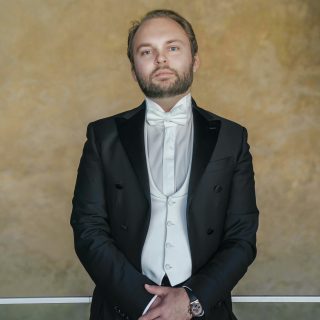 Tenor Matthew Swensen
In leading roles that range from Tamino to Tom Rakewell, Ferrando, Fenton and Nemorino, Matthew Swensen's compelling performances have taken him to Maggio Musicale Fiorentino, Carnegie Hall, Oper Frankfurt, State Opera of Prague, the Amsterdam Concertgebouw, Theater Basel, The Rheingau Festival and more.
The 2024/25 Season begins in the summer with Wagner’s Der Fliegende Höllander as the Steersman in his debut at the Teatro Regio di Torino and again with Jaap Van Zweden and the Concertgebouw Orchestra in Amsterdam later in September. He sings several performances of Beethoven’s 9th Symphony with the Allentown Symphony, the Rochester Philharmonic and on tour throughout Italy and Germany. He makes his debut with the Deutscher Symphoniker in Bruckner's Te Deum and again in Bach's B Minor Mass in Munich.
He makes his role debut as Nemorino in New Orleans Opera's Elisir D'Amore, and reprises the role of Count Almaviva in Rossini’s Barbiere di Siviglia with Lyric Opera Kansas City. In April 2025 he will make his Canadian debut with the Montreal Symphony in a concert performance of Mozart's
Cosi fan Tutte.
 Baritone Joshua Conyers
Grammy-nominated Baritone Joshua Conyers has been singled out by Opera News for his “deliciously honeyed baritone that would seduce anyone”, by The New York Times as having “a sonorous baritone” that “wheedled and seduced”, and by The Washington Post for have a "show stealing" performance. A native of Bronx, NY, he has been hailed by critics for his performances of new and standard operatic works, as well as on concert stages in North America and internationally. Conyers’ dedication and vision as an artist, educator, and advocate strives to propel the performing arts industry forward. Conyers’ busy 2024-2025 season includes his debut album A Miracle in Legacy with Pianist Chelsea Whitaker, and a North American recital tour. With compositions by Shawn E. Okpebholo, Carlos Simon, a commission piece by Emmy Award winning composer Jasmine Arielle Barnes with poetry by Deborah Mouton, and a commission piece by Brooklyn Art Song Society (BASS). Joshua joins Piedmont Opera for Norman Dello Joio's Joan of Arc: The Trial of Rouen portraying the role of Pierre Cauchon, Hassan in Edmond Dédé's Morgiane, ou, Le sultan d'Ispahan with Opera Lafayette and Louisiana Philharmonic Orchestra, and Falstaff in Giuseppe Verdi's Falstaff with Vashon Opera. On the concert platform, Mr. Conyers makes his debut with the New World Symphony for George Crumbs' A Journey Beyond Time: American Songbook II, the Bass soloist in Handel’s Messiah in his debut with the Phoenix Symphony, and a recital Histories VI: Goethe (Songs by Franz Schubert and Hugo Wolf) with pianist Dimitri Dover at the Brooklyn Art Song Society.
To learn more about Joshua Conyers, visit his website!
Podcast
With Julia Figueras, Maestro Delfs, and Choreographer Norwood "PJ" Pennewell
Julia Figueras: Welcome to Voices of Today, a podcast for the Rochester Philharmonic Orchestra. I'm Julia Figueras. The story in ballet and classical music is legend. When Igor Stravinsky's ballet The Rite of Spring was premiered, a near riot ensued. The vitality of this landmark work has continued unabated since that infamous debut 110 years ago, albeit mostly in the concert halls these days. Garth Fagan Dance and the RPO are unveiling a new interpretation of The Rite of Spring. Garth Fagan Dance's new artistic director, P.J. Pennewell, and RPO Music Director Andreas Delfs join me to discuss this joint adventure. Congratulations on this very interesting project and thank you very much for being here today. Andreas, a bit of brief background. Stravinsky already had two successful ballets under his belt when The Rite of Spring was premiered, but the audience wasn't really prepared for what they saw, were they?
Andreas Delfs: No, I think you're referring to Firebird and Petrushka, which in terms of storytelling and especially musical language, are mild compared to what people encountered that fateful night in 1913, in Paris. I think it was, you know, sometimes in music we have quantum leaps. Take, for example, Beethoven between his second and third Symphony. It's a quantum leap, right? Or take Wagner between Tannhauser and Rheingold. Quantum leap. And for Stravinsky, I think it was this. I mean, I love Petrushka, which we've done last season, and Firebird, which we will do next season, but Sacre du Printemps, that's a whole different kettle of fish.
Julia Figueras: It's a whole different kettle of fish, both orchestrally, which is what we're used to hearing in the concert halls. And it is, P.J., A very different kettle of fish in terms of ballet as well, isn't it?
P.J. Pennewell: Oh, yeah. Absolutely. Yeah. Andreas and I were talking about how interesting the change of meters and challenging the change of meters can be. I mean, just that alone is daunting for a dancer who loves to have a consistent–not necessarily all the time 4/4 timing–but a consistent meter, a consistent cadence throughout their piece. So they can kind of stop thinking about counting or thinking about the pulse. Andreas and I were talking about how in some of the sections, the meters can change two and three times within the course of 2 or 3 minutes. So that makes it very challenging for us to kind of keep a continuity going.
Julia Figueras: But beyond Stravinsky's description of the original ballet. But she said with knock kneed and long braided lolitas. Do we have any idea what the first ballet actually looked like?
P.J. Pennewell: I've seen a representation that was presented by the Joffrey. I think the Joffrey was the first company that tried to recreate as much of the original Nijinsky ballet as possible. I didn't really realize this, but I just found this out recently. There was no real documentation of the full ballet, so a lot of the reproduction had to do with images, photographs, and there clearly wasn't film back then. So a lot of it had to be researched historically. And so, I'm not really, I'm not really sure how it was done, but apparently it was successful. Clearly we had representations of the costuming. And then the movie Nijinsky did a good job of representing some of the sections that were, I guess, harder to count. I guess there were, there was a scene where we saw Nijinsky and the wings counting as the dancers were trying to keep track of, you know, their counts.
Andreas Delfs: Yeah. The fun part of that is when Nijinsky was in the wings trying to yell, one, two three, one two three four five, one two three. Apparently, the noise in the audience that was so outraged by, I think, mostly the choreography and some by the music as well. The noise from the audience became so loud that Nijinsky's yelling from the wings could not be heard by the dancers. It must have been quite an evening.
Julia Figueras: One of the other issues with this was the actual subject matter, Andreas. Because it wasn't, well, why don't you give us a little summary of the original storyline. Of what The Rite of Spring was?
Andreas Delfs: Well, Julia, there is not much in you know, contrast to the ballets we mentioned earlier, Firebird and Petrushka, which are really complete stories that you could write down and read. And actually, Firebird is based on an old Russian fairy tale. There's nothing like that for Sacre de Printemps. It's very vague, and which is a wonderful thing because it gave choreographers so much leeway to do with it what they wanted. There are a couple of headlines not in the score, but in the piano score. This piece was first published as a two piano version. And the people who played it first in public was Stravinsky and Debussy. Can you imagine what that sounded like? So in the score for two pianos, there are headlines, and they say things like the young people greet spring with a crazy dance, and the young maiden is chosen to lead the old sage. And the chosen one dances herself to death. All in all, not more than I think 8 or 10 of those headings. And we know from talks with Diaghilev and Nijinsky and Stravinsky that it's supposed to portray pagan Russia, pagan rites in Russia, but it could be anywhere. It uses a lot of Russian folk music, but the pageantry and the pagan rites could have well been all over the world. It's primitive cultures celebrating the beginning of spring, which end in a... I don't want to say religious sacrifice, but in a sacrifice. At the end of that spring celebration, a young girl gets sacrificed, or rather sacrifices herself. That's all we know. So that's not much of a story you can do with a lot. And as you've seen, choreographers during the last 100 years did a lot with this. It gives them a lot of freedom to tell their story.
Julia Figueras: I was going to ask you, PJ, what are you going to do with that latitude?
P.J. Pennewell: I'll answer that, but since we're talking about the score, I did want to ask Andreas because I read something recently where Stravinsky kind of pushed back on the idea that there were specific Russian folk themes in the score. Did you–?
Andreas Delfs: He did, but he was proven wrong by musicologists later on. As a matter of fact, the famous bassoon solo at the beginning is taken from a collection that we know Stravinsky had in his library of Latvian and, I'm sorry, Lithuanian folk songs. The bassoon solo is, from a collection of Lithuanian folk songs and musicologists rather recently got hold of that book of 50 Lithuanian folk songs and a couple of other collections of Russian folk songs that other Russian composers like Rimsky-Korsakov used at the time. And I think there have been numerous songs and tunes identified that are part of Russian folklore. And Stravinsky did push back on that and said, well, yeah, maybe it was subconsciously somewhere that I heard it as a child or so.
Andreas Delfs: Whatever it is, it's authentic. And whether he took it from a volume of collected Russian folk music or whether it really it's very possible, you know, I have music in the back of my head. I have no idea where it comes from. And it could be nursery rhymes. It could be music we heard when we were five or 6 or 7 years old. But it is. It is a lot of traditional Russian folk music and Russian songs in that score.
Julia Figueras: So P.J. let's go back to that question. Lots of latitude. What are you doing with it?
P.J. Pennewell: Well you know, I've seen quite a few versions. Andreas and I talked about Pina Bausch's version. Who, Andreas has actually conducted that version before. It was… it was kind of rough. It was rough to decide on what the very first step was going to be based on who these people are. So I had to decide. I don't know much about Russian pagan rites or ritual, so I clearly wasn't going there. I had to see Paul Taylor's version to see how he, what his slant was, Graham has a version. So I decided that instead of making it a, it's still a spring ritual, but this collective of people are basically the healing clan society in this, this group of this, this society. So what I wanted to do is I wanted to show the process and the progress that a chosen one goes through to become the next healer or the next shaman in the society. So this ritual now becomes, we see this young woman who eventually emerges as the chosen one, become, go through her process of enlightenment. So at the, so what Andreas was referencing and we talked about it a little while ago, was the idea that this woman is not going to dance to the death. She's not going to do a sacrificial dance to the death. She's actually going to do a dance to enlightenment. So we're going to watch her transition from the initiate to one of the younger healers or seers.
Julia Figueras: So you choose to put a different twist on the end of the ballet than virtually anybody else has ever done with this ballet.
P.J. Pennewell: Yeah.
Julia Figueras: The timing of this project is really remarkable for you, especially PJ. It was just late November when it was announced that Garth would be stepping down, and you were named as the new artistic director of Garth Fagan Dance. So, this is your very first big work of, in your new position. And how does that feel?
P.J. Pennewell: Well, as you as you said when we first talked about doing the podcast Andreas, Julia said, so wow, Rite of Spring as your first your foray as the artistic director, that's going to be a heavy lift. So it is very much so a heavy lift. And of course, it wasn't planned. So it's kind of kismet that it all worked out the way it did. But I'm very excited. One because it is that really, it's probably going to be a seminal work that happened during this transition for myself in the company. But you know, this is an opportunity to just give a shameless plug to Andreas because Andreas and I talked a year ago, and as far as I'm concerned, the moment we came into the room and we just had a couple words together, I knew that I was in love with this guy. Because Andreas sees the project as a way to actually take the art form forward and to make it a presentation that is not just the idea that we're going to the theater to listen to the orchestra, to listen to a symphony, or we're just going to the theater to see dance, he really wanted it to be a collaborative endeavor.
P.J. Pennewell: And there's going to be some elements that go beyond what is the normal viewing experience. When you do see ballet and the symphony and we're going to leave that as a secret, and it's a nice little nugget that you'll experience when you come to see the show. But just the idea that Andreas was like, we got to do something different. This can't just be the typical experience, the viewing experience. We have to, this is an opportunity for us to really make a statement. And since the piece is about making a statement, which it did 110 years ago, Andreas said there's no reason why we have to now keep it in the museum of how these things are done. Let's just do something very different. So that gave me an enormous amount of inspiration to actually have even more latitude in terms of the creative process.
Julia Figueras: You do have three basic audiences who will be there. We are going to have see, those of us who are familiar with both the RPO and Garth Fagan dance and have attended, you will have Garth Fagan dance fans who have never attended the RPO. You will have RPO fans who have never seen Garth Fagan dance. So you're going to be wedding these people. How do you push the envelope without alienating your core audiences, starting with you, Andreas?
Andreas Delfs: Well part of the answer to that question PJ just gave you. We were early on deciding that we didn't want your typical performance of a ballet where, for example, the orchestra would be invisible in the pit and the dancers would be in beautiful costumes and the beautiful scenery on stage. We wanted to do something where both visually and acoustically the orchestra and the dancers are on eye level. So the orchestra on stage and the dancers on stage in a configuration that makes you see the movement of the dancers and the movement of the musicians as well. You know, I'm always intrigued when I work with choreographers, which I love, my early career was spent with some of the greatest dancers and choreographers in Europe. We're basically doing the same, but in opposite directions. You know, I use my movement to guide and shape the music in front of me, and PJ uses the music in front of him, or rather, coming out of his speakers to shape and guide the movement of the dancers, you know, so it's music guides movement versus movement guides music. And I find that always very intriguing when I work with choreographers. And that's kind of what we want to bring out, you know, we want to, PJ just said we don't want to give it away, but we want to have some kind of interaction between the musicians and the dancers to show that our art forms are intensely related.
Julia Figueras: PJ, what about you? Pushing that envelope without pushing people away?
P.J. Pennewell: Well you know, it's, you can. So I could concentrate on that. See, the thing is, is once I got the okay or once I got the idea that Andreas and I were on the same page, and he kind of spurred on a certain spark. I had to then just leave it alone. I mean, intellectually, I get it. I get that there's going to be a melding of three different, you know, sects in the community. But once I understood that, I had to just kind of leave it alone. And I had to say, okay, if I worry about that, then I'm going to start choreographing so that the Fagan people can have something to appreciate, or I'm going to really make sure that it's musical so that the symphony goers will have something to appreciate. And then I was like, no, I can't do that. I just have to stay true to where I think I want to go with this and acknowledge, of course, who is going to be there, but ultimately this project's either going to be a success or it's not. And so, you know, if I kind of concentrate on that, that might sort of curtail some of the maybe more innovative things in my mind that I might want to try, but yeah, there's that danger of because this is now probably going to be the 20th version of it. To make it unusual. There's a possibility of Pit-falling into making it too esoteric, but then you also don't want to, you know, swing back to the other side and make it too obviously palatable. So to try and figure that out, I had to just say, I can't worry about who's coming. I just have to, you know as long as Garth is pleased, as long as Andreas is pleased, then I feel comfortable that whoever shows up will ultimately appreciate the experience.
Julia Figueras: This is a piece of music that is fraught with beautiful melodies and with a little bit of danger as well. What is it about this piece, Andreas, that has for 110 years, captivated the audience so thoroughly?
Andreas Delfs: Well, I think it's the prominence of the element of rhythm. Absolutely. I mean, rhythm is in all of Stravinsky's scores, but the rhythm that he uses is so, how shall I say, primitive is not the right word, but, you know, it's, whenever I do this piece, I think of the dawn of the earth and the dawn of mankind. And I often think like, what were the first sounds people made or that was audible on our planet before we called it music, you know, and you very quickly come to. Well, maybe the first melodies that were there was birdsong. Right. Sounds of nature. Thunder, rain patter, rhythm, but definitely birdsong. And that's definitely why Stravinsky starts this piece with the bird concerto, very much like Ravel does in Daphnis and Chloe, which is the first piece of our program, also Bird Concerto. And then soon after the bird concerto has been going on for a few minutes, you hear a very, [Imitation of the severe string motif that starts the 2nd episode: Auguries of Spring] Bum Bum bum bum bum bum bum bum bum, you know.
Andreas Delfs: Then accents come in and the rhythm gets a little distorted. So but it's primitive man, quote un-quote, thumping on a tree trunk or even, you know, as many choreographers do, just stomping their feet on the ground and unforgettable Pina Bausch on, on the stage was all filled with earth, and the half naked people were just stamping their feet onto the earth. It's very Neanderthal, you know, very primitive man. And he plays on that with so much joy. I think that electrifying primitivism that then becomes very sophisticated. I mean, some of the rhythms that are derived from that beginning are incredibly complex. And PJ said the change 2 or 3 times within two minutes. I'm sorry, it's like change 2 or 3 times every 10 seconds you know, there's a section, The meter changes every single bar, and so it has a lot to do. Peter and I talked about that. Why is this always, no matter whether you do it as a choreographed piece with dancers or as a concert piece, it's so alive and so electrifying. And I think panic is a very important element of that. All these rhythms Stravinsky could have written much easier. He could have written 4/4 and accents in the, you know, syncopations and so forth. But he chose to write 2/16, 5/8, 3/16, 11/4. Everybody who is involved in a performance of Sacre is at the verge of panic. Will this fall apart? Or can we actually reach the end of the piece without a major accident? And that kind of heightened stage of excitement that is close to the border of panic. Every time you do Sacre that is there and everybody feels it. Every dancer, every instrumentalist feels it. And I think the audience feels that vibe coming from the stage more than in any other piece of music that I know.
Julia Figueras: I think you're absolutely right. There's a distinct sense of danger for those of us who are sitting in the audience and, you know, and there's always that group of people that are hoping for failure if you know, they're always scared.
Andreas Delfs: One of my favorite quotes, Julia, is a great Nikolaus Harnoncourt, the champion of old music, who once said "Everything artistically exceptional always happens at the borderline to catastrophe". I love that.
Julia Figueras: So we have a piece on the borderline of catastrophe. PJ, when you choreograph a piece, what are your first steps to choreograph?
P.J. Pennewell: So we have two two-hour classes a day. The first half hour of the class we’re on the floor. We're stretching, we're lengthening. The next half hour we're actually standing and we're working on connective tissue. And this is all to kind of put the technique in your body so that it then can become second nature. The last part of class is we're actually doing what we call progression. So we're dancing across the floor and utilizing all of that stuff that we just went through for the first hour. What I started doing probably 13 years ago is I started to record these progressions across the floor. They could just be 6 or 7 bars of dance. That they just repeat back and forth, and then we'll change to another set of different types of progressions. And what I found I started doing was whenever I needed to start choreographing, I would just pull out 2 or 3 of those sections of the progressions that I had recorded, and just try to put them together to create a kind of choreography.
P.J. Pennewell: And the challenge is to make movement that you do in class become a choreography, because classroom music is not choreography. When you're practicing your scales, that's not what you're going to be doing in the symphony. So with Rite of Spring, that's how it, that's all I did. I just used some of the movements that I did in class. The importance of using movement in class that I use in class is the fact that we've been practicing it. So there's not really a lot of time that's needed to actually learn these movements. It's already in the dancer's bodies. The challenge then becomes rhythmically, now, what are we going to do when you use this music that we, this movement that we use classroom music to? How are then now are we going to keep the same rhythmic structure when we're using different music that could be slower or faster or brighter or softer? And so that's usually what happens. But when that usually happens, the music that we're using for the choreography has a consistent meter.
P.J. Pennewell: So the Rite of Spring then became a real incredible challenge for the dancers because there are sections where we have taken some of those classroom movements, and I want them to maintain that, that rhythmic structure over or under what Stravinsky is doing or what Andreas is having the the orchestra do. What it's going to look like when it brings together. You know, I have to explain to the dancers that Andreas is going to do the best he can to adhere to the recorded score that, you know, he signed off on.
P.J. Pennewell: But it's live. It's a live experience. There's going to be some sections where, you know, Andreas is going to be feeling that it has to just go a little bit slower. So you need to be cognizant and sensitive to the fact that that is going to happen and don't fall apart because, oh, God, the you know, that's not the rhythm that we that's not the cadence. That's not the tempo that we initially, you know, considered. Nothing about this production is going to be predictable. And that's what's really super exciting about it.
Julia Figueras: I'm curious to know which recording Andreas, you signed off on and why you chose that one.
Andreas Delfs: It's Herbert von Karajan and the Berlin Philharmonic, which is my normal go to conductor in orchestra, partly because, when he was music director of that orchestra, got the most beautiful sounds out of any orchestra in the world, I think, and also because he is a very, which not many people know, he's a very rhythm oriented conductor. Everybody thinks always Karajan is beautiful, smooth sounds, but rhythm is a very, very important backbone to all of his interpretations. So when he unfortunately didn't record much 20th century repertory, he's firmly grounded in the Beethoven Brahms world. But when you listen to the recordings he did make out of Stravinsky and Prokofiev and Schoenberg and Bach, they're all exemplary. Well done. They're wonderful. They're reference recording, as I call them. And I just took the time, which I'd never done before, to compare his tempi to the ones that are in the score and are authentic Stravinsky tempi. We know that because, as I said earlier, he used to play it at the piano quite a bit with his buddy Claude Debussy. And the metronome marks were correct. And, and Karajan is almost always right on the bottom, exactly at the metronome that we know from Stravinsky. So I thought that was a good choice. And as PJ said, there will be adjustments, and it's not so much the tempi. It's like when you have a choice, for example, in an accelerando speeding up or rallentando slowing down or fermata, that's arbitrary, you know? And PJ already told me, for example, in this, in that section, he might need a little bit longer, like a pause between this note and that note that we can easily add like a comma. That's why I will go to a rehearsal before we start working with the orchestra. So I know if there are moments that the dancers might need a little extra time, or maybe even see a huge upbeat from me so they know the next section comes in. Whatever it is, we're going to work that out. That's the nice thing between working of conductor and choreographer together.
Julia Figueras: PJ, Andreas has a score and he can work from that score. What kind of documentation, notations, do you make for your choreography so that Garth Fagan dance or another dance troupe years from now can replicate your artistry?
P.J. Pennewell: Well, we record it. The thing with the recording is it's a two dimensional representation. So you are losing some of the nuance. So whenever we do use recording as a blueprint, we make it clear that this is a blueprint. And it's a living experience. So, you know, this happens quite often where we'll want to revive one of Garth's pieces. And we're going to have to use a video because some of the other dancers aren't around to show their parts. So we have to make it clear to the dancers that this is the blueprint. And Natalie and I are, once the blueprint is set, Natalie and I are going to sit back and watch it, and then we're going to fine tune it, and to fine tune it,
P.J. Pennewell: Fine tuning can be either, you need to, you really, I know on the tape it looks like you were center stage, but you're actually two feet right of center. And it can also be, you know, the dancer that did that might not necessarily be able to do what you can do now, or you might not be able to do what that dancer could do. So we're going to maintain the integrity of what that track is, but we're going to make sure that it becomes you. So you're not just parodying what you saw in the video. You're going to maintain a certain level of the original experience, but we're going to make sure that it then becomes you. So it looks like it's really you coming into the piece as opposed to you're just recreating the piece.
Julia Figueras: So where do you know that blueprint is set when as you are choreographing a piece, do you go back and say, fix that? Or when do you know to walk away?
P.J. Pennewell: Yeah. So there's two answers to that question. The first is, you know, it's done. You know, when you can say that this will be the blueprint pretty much historically for us when it's been performed and when Garth says, okay, that is the performance that we want to use as the blueprint. But then when you walk away is a tough one for us because, you know, and I'm coming from the Fagan school because Garth will create a piece and he'll, and we'll believe that it's pretty much set. And then he'll come back to it two years later and we'll be doing what we did 10 years later, and we'll be doing what we did ten years earlier. And he's like, no, wait a minute. I need that to be over there. And we're like, yeah, but Garth, you know, it was here first. And he's like, yeah, I know. But now I want it over there a little bit. So it's never really, truly written in stone. There's the blueprint is there. But there's always, you know, you go back and you look at your work, you know, from four years ago and you're like, oh my God, how the heck did I... What was I thinking when I did that? Let me change this. Let me alter this a little bit because now as an older person, I feel like what I really want to say is this, as opposed to what I was saying four years ago.
Julia Figueras: Parallel question for you, Andreas. You have performed this piece any number of times. When you go back and look at the score, how much do you change from performance to performance, year to year? Are you clearly playing this differently than you would have conducted it ten years ago?
Andreas Delfs: Yeah, certainly. I mean, just like P.J. just said, the work is never done. And whether it's a Beethoven symphony or Sacre du Printemps, you always try to start from scratch again to have the approach. You do this for the first time and approach the score with the same sense of wonder. Now, with the ballet and working with dancers, certain things need to be worked out between the two parties, and that's tempi. I mean, you don't want to do, when you do a ballet in repertory like I did many years, you know, night after night after night. And you do different tempi every time the dancers go crazy. And they really don't like that. Right. But for example, in a piece like Sacre du Printemps, whereas the rhythms and the tempi are kind of fixed within a certain margin, what is not fixed and what's different for me every time is the, what I call the big picture. You know, this is a searing red hot piece. And if you play every single part searing red hot, it's overwhelming. You have to make a decision. Okay, in this passage, I relax a little bit with my movements and let the musicians relax a little bit.
Andreas Delfs: And here I really challenge them to play this sforzati. And the short note as powerful and brutally as they can. And in the next section I really try to make a transition to the, you know, the big arch from the first note of the piece to the last note of the piece. That is something that one has to keep in mind that the pacing, for lack of a better word, and that it's nothing to do with the tempi or the notated rhythm that has to do something with your vision of how the piece should come out as a whole. And that is different every single time, because sometimes I take my inspiration from the opening bassoon solo, and I think this is really the spark that I have to keep that in mind. When I look at the end of the piece, sometimes I find the bird concerto at the beginning, the moment that really sets the stage. And I just read today that, by the way there was no dancing until that rhythm. [Same imitated string motif] Bum bum bum bum bum bum.
Andreas Delfs: So the first three minutes curtain closed in the original production, and then they started dancing with that driving rhythm. So it kind of sets the stage. And sometimes I think of that when I start the performance, and I think this is where I'm going to take my jumping off point. But that's the joy and the difficulty of being a collaborative artist, because, you know, you have to make sure that these visions of the whole, you know, the whole big arch of the performance, that they are in sync.
Julia Figueras: PJ, how self-critical are you?
P.J. Pennewell: Very. But I'm more mature about it now. In the beginning, when Garth said you're choreographing next year. And I was like what am I supposed to say? How am I going to choreograph on your stage? And it was like everything had to be just right. It had to be just in the right place. I saw the Nijinsky movie. So I, you know, I was, I wanted to make sure that I did not present like how Nijinsky presented as a choreographer. I didn't want to be this overpowering, but at the same time, I wanted to make sure that things, that the details were clear so that when I look back at it, I could say, okay, this is what I wanted. That was a mess. How did I even do that? But now I'm like, well, why would anybody want to try to do a new version of Sacre right now? I mean, what has, what hasn't been said yet? And who would want to do this with a group of people that haven't really performed with live musicians before? I'm not going to I'm not going to beat myself up.
P.J. Pennewell: I'm going to do the best I can do. You know, as I said earlier, Andreas is right there with me. You know, Andreas is going to come to the studio next Friday to take a look at it. And it's going to be what it's going to be. It is what it is. I believe in it. I think it's, I think it's going to be beautiful. And if it's not, I mean, if it doesn't go over well, then I'm just going to chalk it up to experience. I'm, you know, I'm just going to say, well, I guess I probably could have did this or I'm just going to live with it and say, let's just see how people respond to it ten, fifteen years from now. Because we all know that, we all know historically that has happened billions of times where Rite of Spring included, you know, people were like, what is what is all of this blah, blah, blah. And why are the dancers stomping their feet? And then, you know, a hundred years later, it is now a classic. So yeah, I'm super critical. I'm, you know, but I'm not going to beat myself up. I'm sorry. I'm too old now.
Julia Figueras: Well, I believe that we may have a new classic on our hands. When your collaboration between Garth Fagan Dance and the Rochester Philharmonic Orchestra is unveiled. I want to thank you both for spending some time to talk about this wonderful collaboration with Stravinsky's Rite of Spring. It's been a delight. Many thanks to P.J. Pennewell, who is the new artistic director of Garth Fagan Dance and of course, the music director of the Rochester Philharmonic Orchestra, Andreas Delfs. I'm Julia Figueras, Voices of Today is a production of the Rochester Philharmonic Orchestra.
P.J. Pennewell: Thank you Andreas. Thank you Julia.
Andreas Delfs: See you soon.
P.J. Pennewell: Yes you will.
Andreas Delfs: Bye.
P.J. Pennewell: Bye bye.
Rite of Spring with Garth Fagan dance
A collaboration with Rochester based dance company Garth Fagan Dance to create and premiere new choreography for Stravinsky’s revolutionary ballet The Rite of Spring.
Stravinsky shot to fame in 1910 when Sergei Diaghilev’s dance company premiered his first dance score, The Firebird. During the final stages of composing it, Stravinsky had a vision: “I saw in imagination a solemn pagan rite: wise elders, seated in a circle, watching a young girl dance herself to death. They were sacrificing her to propitiate the god of spring.”
Diaghilev sensed the choreographic possibilities in this material and asked Stravinsky to develop it. The composer, and scenic designer/archaeologist Nicolaus Roerich, collaborated on the scenario of Le Sacre du printemps (The Rite of Spring), placing it in an ancient Slavic community. Stravinsky began work on the score in Russia but composed the majority of it an eight-foot-square room in Clarens, Switzerland.
Diaghilev entrusted the choreography to Vaslav Nijinsky, one of his company’s most gifted soloists, but an inexperienced dance master. Nijinsky demanded more than 100 rehearsals due to the music’s rapidly shifting meters and his insistence on matching the dancers’ steps precisely to them. The rehearsals degenerated into little more than frantic exercises in counting, resulting in frayed nerves and explosions of temper by choreographer and performers alike. Still, the final runthrough went off smoothly, without a hint of possible controversy.
All that changed before the curtain even rose on the first performance (May 29, 1913). “Mild protests against the music could be heard from the beginning,” Stravinsky wrote. “Then, when the curtain opened on a group of knock-kneed and long-braided Lolitas jumping up and down the storm broke.” The infuriated composer rushed backstage, where Diaghilev was turning the house lights off and on in an attempt to quiet the audience.
Meanwhile, the auditorium was in an uproar, the production’s supporters and detractors clamoring to make their feelings known. According to an eyewitness, “a certain part of the audience was thrilled by what it considered to be a blasphemous attempt to destroy music as an art, and swept away with wrath, began to make catcalls and to offer audible suggestions as to how the performance should proceed. The young man seated behind me in the box stood up during the course of the ballet to enable himself to see more clearly. The intense excitement under which he was laboring betrayed itself presently when he began to beat rhythmically on top of my head with his fists. My emotion was so great that I did not feel the blows for some time. They were perfectly synchronized with the music. When I did begin to feel them, I turned around. His apology was sincere. We had both been carried beyond ourselves.” Overnight, The Rite of Spring transformed perceptions of Stravinsky from talented if dutiful follower of Rimsky-Korsakov to the ranks of such “wild men” of music as Bartók and Schoenberg.
In 1920, choreographer Léonide Massine mounted an entirely new stage production for the Ballets russes, one which dispensed with outside associations of any kind and turned the piece into an abstract ballet. Its success confirmed in Stravinsky’s mind that the true home of the music lies, as it does with Ravel’s Daphnis, in the concert hall.
Program Notes by Don Anderson ©2023
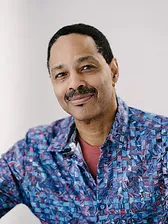 PJ joined Garth Fagan Dance in 1978 and is described as a ‘"quintessential Garth Fagan Dancer, and Fagan’s assistant and muse.” As a dancer, PJ has had several major works created for him including Passion Distanced, Time After Before Place, and Moth Dreams. As a choreographer, PJ assisted Mr. Fagan during his work on Broadway’s The Lion King and has choreographed 11 new works on his own. He is the only choreographer other than Mr. Fagan himself to choreograph works in this style. The New York Times described him as “know[ing] how to organize bodies. And he knows these bodies: their strengths, their weaknesses, their inclinations, in relation to a very particular way of moving.”
For more information on PJ, visit Garth Fagan Dance's Website!
 Garth Fagan Dance (GFD) is the Finger Lake region's leading artist-led, predominately Black cultural institution focused on the development of young dancers, especially those of color. Known around the world for his groundbreaking choreography of Broadway’s The Lion King, founder Garth Fagan is widely acknowledged as the architect of a distinct new movement style and the man who transformed Rochester, NY into an incubator for world-class contemporary dance.
Under the creative leadership of PJ Pennewell, GFD champions a process to offset limited opportunities for these dancers with a potential for a professional career. With over 53 years of award-winning choreography, Garth Fagan Dance stands as a beacon of innovation, creativity, and artistic excellence in the world of contemporary dance. The company has recently been welcomed into the 'Archives of the Library of Congress' and designated a 20th-century dance treasure, with Garth acclaimed as the longest-running Black choreographer on Broadway.
To learn more about Garth Fagan Dance, please visit their Website!
Podcast
With Julia Figueras and Andy Akiho
Julia Figueras: Welcome to Voices of Today. A Production of the Rochester Philharmonic Orchestra. I'm Julia Figueras, percussionist and composer Andy Akiho offers up works with rhythm, wine bottles and occasionally ping pong balls. And he joins me today. Welcome.
Andy Akiho: Hi, Julia.
Julia Figueras: I introduced you as a percussionist and a composer, but you were a little late to the percussion game, weren't you?
Andy Akiho: I'm late to everything in life, but I think I'm the latest in the composition game. I've been playing drums most of my life, I got into composition pretty late, or quote un-quote, being a composer. I was about 30 years old. 29.
Julia Figueras: At what point in your percussion career did you get that itch to compose?
Andy Akiho: Well, that's I think the lines are kind of blurred or gray because as a percussionist, we often have to find our own timbres and sounds. So you're already implementing a lot of kind of composition vibes into just being a classical percussionist or contemporary new music percussionist. And I also just, I just like working out things with my friends and just kind of going through that. It led me into just really going forth as a full time composer. But there's a there's a, long story short, it was basically writing for my friends and really getting into jazz and starting to write a little bit of charts and things like that, starting with arrangements. And then I just got the bug and, and became a, I guess, a full time composer and trying to be at least.
Julia Figueras: Way back when, when I started in radio, I was actually in a modern rock station. So I was playing things like, you know, The Clash and Blotto. I want to be a lifeguard and eventually worked my way into the world of classical. You were going to be a rocker as well, were you not?
Andy Akiho: Yeah. My sister got me started on drum set. She had a Tama kit. And we were, you know, she'd teach me Metallica songs or licks and the mid 80s, late 80s. And I was into all that and just trying to be a rock drummer.
Julia Figueras: So how did you get that seismic shift from playing Metallica drum lines to writing music that the Rochester Philharmonic Orchestra is going to play?
Andy Akiho: I still feel like I'm that kid. When I'm doing the new pieces, too. But I, the shift just kind of happened more in my 20s. Late 20s. Like I was saying, I went back to school, and I just got really inspired by all the new music performers around me, and I just wanted to write pieces for them. And with me playing the steel pan with these ensembles. And this was, these beginnings kind of started around Manhattan School of Music. When I went back to school after being out of school for about 7 or 8 years and just coming back at having new life in that scene just really inspired me. But there was a lot of influences. My friend who was living in Rochester going to Eastman School of Music, Baljinder Sekhon. We were roommates in South Carolina, and he kind of encouraged me to start composing as well. And I actually spent a summer in Rochester when I was first becoming a composer. This was back in 2007, and that's where I wrote a lot of my first compositions was actually in Rochester. I have a piece called Karakurenai, and it was originally subtitled Rochester Song, and that's one of my very first compositions. And that's one of my pieces that gets played the most. I'm actually about to go into a rehearsal to play that in about 20 minutes. So there's a lot of roots in Rochester for me becoming a composer, actually.
Julia Figueras: And we are proud of it. I'll tell you. How did you get to the steel pan? Because that's an unusual instrument. Not going to find that in an orchestra.
Andy Akiho: Yeah, I'm trying to bring it into orchestra more with the steel pan concertos I've written, but I got started with that and my undergrad in University of South Carolina, and this is around 1997, 98. And I was just playing in all the ensembles, West African drumming, Brazilian ensemble, band, orchestra, drumline, steel band. And I really got the steel band bug, especially when I got into jazz. I went to North Texas for a year and I started transcribing a lot of, I started with a lot of Charlie Parker, Sonny Rollins, Miles, and I would just learn the instrument like that now, and I just really fell in love with the instrument. And then I went to Trinidad, the birthplace of the instrument, and played with the steel orchestra there, up to 160 members per band. And that gave me energy. And there's a lot of that in my music, kind of subconsciously from those days in Trinidad. But the steel band I just got, I got that bug too. I got really obsessed and we'd go to Trinidad all the time, and that's what brought me to New York. I wanted to be a steel pannist, and I moved to New York and started playing with the bands in Crown Heights and Brooklyn area and that became my life for about seven years.
Julia Figueras: You said in another interview that you had a really hard time embracing the idea of considering yourself a composer. Why is that? How did you get past that?
Andy Akiho: I'm still not past that! I feel like the more I'm doing it, it seems like the harder it is sometimes. I just try to be childlike in every new adventure, whether it's writing a ping pong and orchestra piece or steelpan and orchestra, or just straight up orchestra. Right now I'm working on a cello concerto and I try to start every piece new, like, I don't know what I'm doing because I usually don't know what I'm doing, and I try to figure out as I'm going and try to learn, trial by fire. And it really inspires me to try new things and to embrace being scared a little bit at the crazy task, but it's fun too, because I like being challenged and I know this will be something I'll never be good at for the rest of my life. So I want to spend the rest of my life trying to get there because it doesn't come easy to me, and it's, but it's a lot of fun trying to figure it out. And then when I'm finished, it's the best feeling in the world. It might be so painful to get there, but when I actually get to hear the piece and hear performers interact and audiences interact with this, it makes everything worthwhile.
Julia Figueras: Those of us who didn't go to music school, and I speak for all of us, really see composition as sorcery. We have no clue how you go about doing that. So how do you go about doing that? Where do you start? You have an object. Do you have a thought? Do you just throw something out there and hope it sticks?
Andy Akiho: I'm very visual, so a lot of times it does start from some kind of external or internal inspiration. A lot of times it manifests itself visually and then I turn it into music. But logistically, I start every piece almost a different way. Sometimes I'll start with just improvising in the dark on my steelpan for hours, and just coming up with little motives like a little three second thing that I can try to write a symphony with or something.I might just go to a percussion studio if I'm writing a piece of percussion in it and just improvise on that for hours and record myself on the iPhone and then just grab bits of pieces of that, or I'll sit at a keyboard and maybe record myself. And I don't even play keyboard. I'm not a good pianist or anything, and I'll just improvise on that. Or I'll come up with a concept, some kind of architecture, and try to live by those rules, but be creative within those rules just to limit myself just so I don't have an infinite possibilities, because it's actually liberating sometimes when you can, when you can limit your possibilities, it forces a different kind of creativity. And it literally, if I'm, I remember writing a harp duo once, I borrowed a harp for a little bit and played on that and worked on it. Sometimes I'll start right on the paper or on the computer. It's different every time. And it makes it a lot of fun. But one thing I'm even just noticing by talking about this is a lot of times I try to be around some kind of instrument or something that produces sound just to kind of improvise the first nuggets.
Julia Figueras: Is that how you've learned all those voices? Because every instrument, of course, has a voice and it strikes me as a percussionist. How do you know the voice of a sax? How have you learned the voice of a cello?
Andy Akiho: Well, like I said, I'm constantly learning. It's something I'll never master, and I'm okay with that, because the adventure of learning these new instruments will be a lifelong process. I don't need to be a virtuoso. I didn't need the instruments to come up with ideas for the instruments because, you know, music's so universal and we can share ideas across instruments easily. You know, most of the actually even with me for steelpan, most of the things I learned on steelpan were from guitar players. I can't play one chord on a guitar, but the guitar players taught me a lot and I applied it to steelpan, so it was more like just sharing the musical language across instruments. It doesn't really matter. Like I wrote a sax quartet once with electronics, and I wrote almost everything on the steel pan for that, for that sax quartet. Of course, I got to know the ins and outs of the transpositions and all the technicalities, the range, these things that, you know, there's always there's resources for. But I don't have to know every single thing about the saxophone to be able to do that.
Andy Akiho: It's just like, how can we translate this, this language, and just share this musical experience. And I'm very particular in my notation. I'm usually very particular with that. But I don't have to know the instruments inside and out to be able to do that. And I don't think anybody does. You know, some people do and it's amazing. But I don't think that's the only way to be creative and to share. Because for writing for full orchestra, most composers probably can't play every instrument in the orchestra, but they can, they can write for it. Sometimes that actually leads to more creativity, too, because if, let's say a violinist wrote for Steel Pan, it's going to be a completely different mindset than a steel pannist writing for a steel pan, right? Or an oboist writing for a piano or any of that. You know, it brings new avenues into the instrument that maybe people haven't thought of before.
Julia Figueras: Is your physical space important to you as you're composing?
Andy Akiho: That is very important. That's one thing, and only because I like to be in new environments all the time. Physical space is the most important to me, more than. Physical space and then the musicians I'm writing for. That's way more important than the instruments, than the staff paper or any of that. It's all about my environment and the musicians, the musicians I'm inspired by and working with that are sharing this experience with me that, you know what I mean? That's the most important for me. That's why even when I'm writing, I really try to get to know the musicians I'm writing for if I don't already know them really well.
Andy Akiho: And then environment, I'm inspired by my surroundings. So I like to be around inspiring people and cities or nature or whatever. But I'm usually an urban kind of guy though, like, that's why I like New York so much. I live like a New Yorker, even here in Portland. I just, I like to bounce around and gather all the energy of the city I'm in.
Julia Figueras: I spent about three hours watching various videos of your pieces and loving every minute of it, and it reminded me.
Andy Akiho: Thank you.
Julia Figueras: Of at times. You're welcome. It reminded me of that time back in alternative rock when it was what they called industrial. So it was Einstürzende Neubauten, Test Apartment, and found sounds. The idea of anything is a percussion instrument, and you can create music on anything. And it sounds, it feels to me like you've embraced that to a large degree.
Andy Akiho: I think I've embraced that just by default of being a human. I think we all kind of want to do that, you know, like, I'm at my friend's house a lot and their six year old hangs out and he'll like, improvise with me on percussion. He's doing the same things. He's like grabbing bottles and he's grabbing things around the house and making music out of that. And, you know, I think that's a very inspiring thing, whether you're a kid or you're an adult, we have to kind of have that naive just adventurous mindset. And anything that makes any kind of sound can make music, you know? And, I'm not like, I'm not a pioneer in this or anything. I just, it's just one of my ways to express what I want to say. So if those instruments are available, I often like to do that. Or if I'm walking around the city and I hear something that can be inspiring. And I kind of do that with traditional instruments, too. If I see a marimba, I usually try to approach it as if there's no rules on how you play it without hurting the instrument, obviously.
Andy Akiho: But if there's, you know, there's different sounds you can get out of it, that maybe you don't have to learn all your major scales to figure this out. That, you can do that with timbre. We're talking about it right now with timbre and found sounds, but I feel like you can do all that with harmony and melody and anything. Dynamics, all the parameters of music, just treating it like as if you were finding a found sound, and you don't have any history or any baggage or history or anything to do with that, those parameters. And you just have fun with it and experiment like you're like you're a kid, like you're learning everything for the first time. And then obviously you mix that in with your previous knowledge and skills that you have worked your whole life developing. And when you can combine both of those and the right amount of mixture of each, there could be something creative out of that.
Julia Figueras: Which brings us to Ricochet. And for the life of me, I cannot figure out how in the world you came up with this concept of violin, found sounds, and percussion, and ping pong balls, but it's this really exciting piece that makes no sense but works so well.
Andy Akiho: The thing is with Ricochet. I mean, I can't take credit for the idea. That was my management, John Jack and Cami Music. John Jack had this idea to make a ping pong concerto, and I actually thought it was ludicrous at first. We met in a ping pong club in New York, Spin, and to be honest, he probably doesn't even want me to give him the credit of it being his idea, But it wasn't my idea. But even several years before I even got introduced to this idea, I was writing some music on a ping pong table, just using it as a table. I don't know how to play ping pong. My friend was there and we were playing ping like just, you know, rallying back and forth, and I heard the rhythms and I was like, man, if you really cool to put this to music sometime, you know, it might be a gimmick, but it sounds really cool. Like, I'd love to do that one day, you know, just for fun, experimental thing. And then coincidentally, I got an offer to write this piece. And I actually, I think at first I was kind of leaning towards no, like, I'm already known as, like, doing quirky things and, and then I was like, no, wait a minute, I want to do this and have fun with it and try to create a piece of music out of this.
Julia Figueras: And you did pull it off. So, you know, thumbs up to you. So you're a, very collaborative. You're very collaborative guy, Andy. Sounds like you work very closely with the people for whom you are writing pieces.
Andy Akiho: Very much so. And it's more of a collaborative effort personality because I, you know, for good or bad, I'm kind of a control freak. And the actual music and the, nitpicking of the details of the music. That's very, I'm a little OCD on that, but as far as the collaboration, I really like to get to know the personalities of the performers and also how they play. And then subconsciously, I'm really thinking every time, like what the feeling of their personality and their energy as a musician and then literally how they play. And then I think, okay, what's something that could challenge them but also excels their strengths as a musician. And the same with me: what's going to challenge me to go somewhere I've never gone to learn from these musicians I'm writing for and take some of that energy and put that back in and create something that's going to challenge us both. But it's going to work towards our strengths as well. It just makes it more fun to do that for me. And I have more fun being around the people I'm working with.
Julia Figueras: When you're writing a piece and working on a piece, you ever have a situation where you've got a riff and it's not working, but you really like it, so you kind of save it and, you know, have your little riff box and tuck it away and come back to it at some point.
Andy Akiho: I wish I was organized enough to do that more. I do, but usually when I'm working on riffs, I'll come up with like 100 different things and kind of filter it out as I'm doing it, which can be pretty painful because then you start second guessing yourself and I end up, just doing that for a long time. And then if something really catches my ears and feeling, then I'd be like, I like that. I just run with it and then I'll try to create something from that little riff. I'm trying to get back to more to where I find that riff that I'm really into, and I build from that. That's why I love Beethoven so much. He'll take one little riff and make an entire symphony out of it. You know, it could be the simplest riff ever, too. And he'll make magic, you know, talking about sorcery like, that's, man, that's why he's my favorite. I think he's the GOAT.
Julia Figueras: I think he is, too. But,
Andy Akiho: Yeah,
Julia Figueras: I think a lot of people think he's the goat.
Andy Akiho: Yeah,
Julia Figueras: He changed music completely. But you're changing music completely as well with what you're doing in many ways. I mean, you're forcing you're forcing the listener to confront or absorb instruments and musicality in a whole new way, and it's magic to me. I wondered, how is the audience going to react to Ricochet? And the reaction was both nights, a roar of applause and everybody to their feet. And I thought that was extraordinary, because you didn't do anything hummable. Nobody was going to walk out of there humming a line from that. And yet they rose and they applauded and they cheered. So that's something!
Andy Akiho: I'm very grateful for that. I want to be able to share this with audiences, and I want to be able to feel that. And if I'm in the audience, whether I've written the piece or not, I want to feel that same kind of thing. And I try to share that when I'm writing a piece of music, too.
Julia Figueras: Are you very self-critical?
Andy Akiho: Of course. I think we all are when we're that passionate about something. And I think that's okay because I think it's good to know there's a lot of room to always grow. There's never there's never an end in my mind. With this kind of lifestyle and these kinds of life choices, I feel like there's never, you never hit a finish line. And you can, there's always room for growth.
Julia Figueras: In the moment of letting go. You finish the piece, you hand it off. What's that feel like?
Andy Akiho: The best feeling when I feel like I've actually finished it properly. And that's why it's hard to be on time or to be early. But I'm trying to get better at that, too. My goal is every piece I turn in is my the best piece I've ever done. So I, at least in my mind, like, I want it to be the thing I'm most proud of at that point in my life. That way, I feel like if I'm giving something, I've given all I've got because I'm grateful that they've even asked for me to make something for them. And I want to build a shared, my best possible work, so that they're happy and we're both happy with the process and the outcome of the musical experience, you know?
Julia Figueras: Andy, I want to thank you so much for sharing with us. It's been a wonderful, wonderful period of time with you. And congratulations on all your successes. Our guests,
Andy Akiho: Thank you Julia.
Julia Figueras: For voices of today. Andy Akiho. And you're welcome. Pleasure was mine. Meghan Dunn is our director. I'm Julia Figueras. Voices of today is a production of the Rochester Philharmonic Orchestra.
Andy Akiho: Thank you. Julia. Meghan. It was so great to see you and talk to you. Thank you.
Andy Akiho's Ricochet (Ping-Pong Concert0)
Andy Akiho is a “trailblazing” (Los Angeles Times) Pulitzer Prize finalist and GRAMMY-nominated composer whose bold works unravel intricate and unexpected patterns while surpassing preconceived boundaries of classical music. Known as “an increasingly in-demand composer” (New York Times), Akiho has earned international acclaim for his large-scale works that emphasize the natural theatricality of live performance. He is the only composer to be nominated for a GRAMMY in the Best Contemporary Classical Composition category in both 2022 and 2023. Recent engagements include commissioned premieres by the New York Philharmonic and National Symphony Orchestra.
His unique work, Ricochet (subtitled Concerto for Ping Pong, Violin, & Percussion & Orchestra) was commissioned by a consortium of Chinese orchestras. The premiere took place in Shanghai in 2015.
To quote British broadcaster Classic FM, “Akiho’s piece turns a game of ping pong into a percussion instrument and takes the familiar sounds of a table tennis game and turns them into a concerto.” The piece displays plentiful imagination and a notable sense of humor. Featured along the way are a solo violin and plentiful percussion instruments – some familiar, some decidedly not!
Program Notes by Don Anderson ©2023
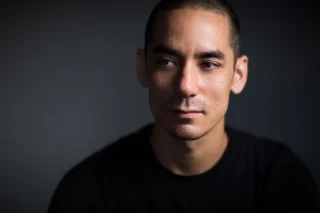 Andy Akiho, a “trailblazing” (Los Angeles Times) composer of international acclaim for his large-scale works, began composing in his late twenties and is now a five-time Grammy nominee and Pulitzer Prize finalist. His music has been commissioned by a number of major international orchestras, including the New York Philharmonic and the Shanghai Symphony.
Akiho’s work is deeply influenced by his primary instrument—the steel pan—which he dedicated most of his 20s to, playing by ear in Trinidad and New York City. He has performed his works with ensembles such as Imani Winds, the LA Philharmonic’s Green Umbrella Series, the Berlin Philharmonic’s Scharoun Ensemble, and more. The steel pan is also featured on many of his recordings, and his deeply physical relationship with playing continues to heavily inform his compositions.
To learn more about Andy Akiho, visit his website!
 David Cossin is a percussionist who specializes in new and experimental music. He plays with new music group Bang on a Can and teaches at the Manhattan School of Music and the Aaron Copland School of Music in New York City. David has recorded and performed internationally with Bang on a Can All-Stars, Steve Reich and Musicians, Philip Glass, Yo-Yo Ma, and many more. He was also the featured percussion soloist in Tan Dun’s Grammy and Oscar winning score for Crouching Tiger, Hidden Dragon. David also works with other art forms including sonic installations which have been presented internationally.
To learn more about David, visit the Bang on a Can or Manhattan School of Music websites!
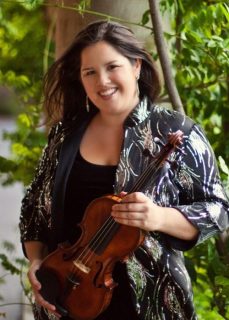 Appointed concertmaster of the Rochester Philharmonic Orchestra in 2005 at the age of 24, Juliana Athayde became the youngest person and first female to hold the position since the orchestra’s founding in 1922. A native of the San Francisco Bay Area, Ms. Athayde made her solo debut at the age of 16 performing with the San Francisco Symphony and has been praised by critics for her “power and precision,” “melting lyricism,” and “larger than life” performances. A passionate advocate for contemporary music, Athayde has premiered a number of works by living composers, including Allen Shawn’s violin concerto (2010), Jeff Tyzik’s Jazz Concerto for Violin (2016), and Roberto Sierra’s violin concerto (2022), all commissioned by the RPO and written specifically for her.
Athayde is also an Associate Professor of Violin at the Eastman School of music and serves on the faculty at music festivals throughout the United States, including Carnegie Hall’s National Youth Orchestra and the National Orchestral Institute + Festival with Music Director Marin Alsop.
To learn more about our concertmaster, please see her full bio!
 The Genesee Valley Table Tennis Club of Rochester, New York is located at the Rochester Sports Garden, a well-lit, state-of-the-art facility with high ceilings and tournament quality tables and flooring. The club dates back to the 1930's and has produced a number of players who have competed successfully, both at the national and international levels.
To learn more about the GVTTC, visit their website!
RPO captures the experience of Akiho’s creative and experimental Ping-Pong Concerto. Featuring the original percussion soloist, RPO’s own Concertmaster, and local professional Ping-Pong Players.
James Lee III's Sensational Dynamism
When I received the commission to compose a new concerto for two pianos and orchestra for the Naughton Duo and the Rochester Philharmonic Orchestra, I was inspired by elements of gymnastics. The title, Sensational Dynamism, reflects the excitement and energy generated when an audience watches exceptional gymnasts perform acts of strength, flexibility, agility, coordination, artistry, and endurance. Similarly, there's a thrilling energy and expectation that comes from witnessing virtuoso pianists display these same qualities while performing a concerto.
Sensational Dynamism is in three movements and is inspired by various forms of gymnastics which are aerobic, artistic, and rhythmic. The movement titles are Summoning Strength, Artistic Movements, and Rhythmic Propulsions. The first movement, Summoning Strength, utilizes material that is drawn from melodic and motivic figures, which almost evoke the idea of an étude in which certain pianistic figures are "worked out" as in a training session. Movement two, Artistic Movements, is focused more on beauty and musical colors. Finally, in the last movement, Rhythmic Propulsions, the music here consists mostly of forward driving rhythms, which are contrasted by elements of "finger gymnastics" that all culminate into an explosive celebration
Program Notes by James Lee III ©2024
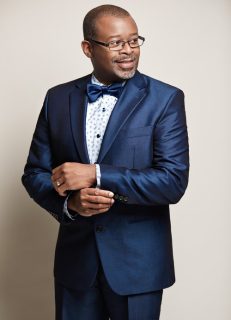 Admired for his “bright, pure music” (The Washington Post), with compositions described as “atmospheric and endlessly inventive” (Cincinnati Business Courier), James Lee III is the composer of more than 80 works for orchestra, chamber ensemble, piano, vocals, choral ensemble and more. For the 2024-2025 season, he serves as composer-in-residence with the Baltimore Symphony Orchestra.
Raised in the Seventh-day Adventist Church, Lee has taken rich inspiration from close study of Biblical texts, from history, and from the international presence of his faith. In addition to English, he speaks five languages: German, French, Spanish, Portuguese and Hebrew. Among his career honors, Lee has been recognized with a Charles Ives Scholarship and the Wladimir Lakond Award from the American Academy of Arts and Letters. Lee’s compositions have been performed by major orchestras and solo performers across the United States as well as Europe and Latin America, and can be heard on ten recordings including pianist Rochelle Sennet’s 2024 album Bach to Black: Suites for Piano, Vol. III (Albany Records). His works are also featured on Anthony McGill and the Pacifica Quartet’s GRAMMY Award-nominated American Stories, cellist Inbal Segev’s 20 for 2020 and the ORF Vienna Radio Symphony led by Marin Alsop.
During the 2025-2026 season, Lee will experience seven world premieres after an initial August 2025 premiere of his new work Connected Perceptions, commissioned by the Festival Orchestra of Lincoln Center and conductor Jonathon Heyward. The first world premiere of the 2025-2026 season will be his work Pitch In for the Colorado Children’s Chorale and the Pacifica Quartet in September. Later in September, Fanfare for Universal Hope will be premiered by Stéphane Denève and the St. Louis Symphony Orchestra. October will bring the world premiere of Concerto in A/Piano Concerto No. 2 by Jeffrey Biegel and the Louisiana Philharmonic Orchestra. In December, clarinetist Anthony McGill and the Isidore String Quartet will premiere Humanity’s Essential Gems. In March 2026, soprano Angela Brown will premiere Phenomenal Queen: Coretta Scott King with Anthony Parnther and the Indianapolis Symphony Orchestra. Later that spring in March, saxophonist Tim McAllister and the Nashville Symphony Orchestra will premiere Lee’s saxophone concerto with Tito Muñoz conducting. Finally, in May, Eric Jacobson and the Orlando Philharmonic Orchestra will premiere Lee’s new work The Enduring Crucible.
A total of four new works by Lee were world premiered during the 2024-2025 season, beginning with the inaugural performance of his Clarinet Concerto by Anthony McGill and the Kalamazoo Symphony Orchestra. The season also brought the premieres of Sensational Dynamism, a concerto for two pianos and orchestra, by Christina and Michelle Naughton and the Rochester Philharmonic Orchestra; Renewed Minds, a cello concerto, by Joshua Roman and the Baltimore Symphony Orchestra; and an additional concerto for orchestra, also premiered by the Baltimore Symphony Orchestra with conductor Jonathon Heyward. Among his other highlights for the season, Lee’s work Ad Adah? was performed by Emanuel Ax and Anthony McGill, first at Irvine Barclay Theatre in California and later at Carnegie Hall. Works by Lee will also be performed this season by the BBC Symphony Orchestra, National Danish Symphony Orchestra, Chicago Symphony Orchestra, Minnesota Orchestra, Duluth Superior Symphony Orchestra, Rochester Philharmonic Orchestra and Pensacola Symphony Orchestra.
Lee’s 2023-2024 season highlights included world premieres of his English horn concerto Courageous Lights by Darci Gamerl and the Augusta Symphony Orchestra, as well as his piano concerto Shades of Unbroken Dreams by pianist Alexandra Dariescu and the Detroit Symphony Orchestra. Works by Lee were performed by such artists as soprano Susanna Phillips, cellist Myra Huang, clarinetist Anthony McGill and soprano Karen Slack, as well as ensembles including the Hamburg Symphony Orchestra, Baltimore Symphony Orchestra, Pittsburgh Symphony Orchestra and Louisiana Philharmonic Orchestra.
In a string of premieres over recent years, Lee has introduced orchestral works including Amer’ican, premiered by the Detroit Symphony Orchestra; Freedom’s Genuine Dawn, premiered by the Baltimore Symphony Orchestra; Arukah Symphony, premiered by the Maryland Symphony Orchestra; Hold On, America, Hold On!, premiered by the Battle Creek Symphony Orchestra; and Tethered Voices, premiered by the University Symphony Orchestra at the University of Michigan. Other works to see their world premieres in recent seasons include Lee’s flute concerto Niiji Memories, premiered by Julietta Curenton and the Columbia Orchestra; his chamber piece Tones of Clay, premiered by the Calyx Piano Trio at Tanglewood; his Violin Concerto No. 2 “Teshuah,” premiered by violinist Carla Trynchuk and the Andrews University Symphony Orchestra; and a piece composed for soprano and string quartet, A Double Standard, performed by Karen Slack and the Pacifica String Quartet at Carnegie Hall.
In the course of his composing career, Lee’s orchestral works have been commissioned and premiered by the National Symphony Orchestra, Detroit Symphony Orchestra, Baltimore Symphony Orchestra, New World Symphony Orchestra, and the orchestras of Philadelphia, Indianapolis, Omaha, Pasadena, Memphis, Grand Rapids, Cincinnati, Atlanta and Akron – led by conductors including Leonard Slatkin, Marin Alsop, Michael Tilson Thomas, Juanjo Mena, David Lockington and Thomas Wilkins, among others. As winner of the Sphinx Commissioning Consortium for the 2011-2012 season, Lee composed one of his best-known works, Sukkot Through Orion’s Nebula, which was premiered by the New World Symphony Orchestra, led by Michael Tilson Thomas, in 2011. In 2014, he was a Fulbright Scholar and Visiting Professor to the State University of Campinas in Campinas, São Paulo, Brazil, where he composed, taught composition, and researched the music of 20th and 21st century Brazilian composers. Lee also previously served as composer-in-residence for the Ritz Chamber Players, an African-American chamber music society based in Jacksonville, Florida. He was selected for two key commissions by the Baltimore Symphony Orchestra: Chuphshah! Harriet’s Drive to Canaan, a work inspired by the life of Harriet Tubman, and Thurgood’s Rhapsody, commissioned for the orchestra’s centennial season in 2015-2016.
Lee’s compositions are captured on albums including Voyages – Orchestral Music by James Lee III (RSO Records, 2022), recorded by ORF Vienna Radio Symphony Orchestra with conductor Marin Alsop, and Alkebulan's Son: The Piano Works of James Lee III (Albany Records, 2014), recorded by pianist Rochelle Sennet. Selections of his work can also be heard on Compelling Portraits (Navona Records, 2023), by trombonist Kenneth Thompkins; Inbal Segev: 20 for 2020 (Avie Records, 2022), by cellist Inbal Segev; American Stories (Cedille Records, 2022), by Anthony McGill and the Pacifica Quartet; Threads (Elmhurst Records, 2022), by cellist Rebecca Merblum; Memories Unsettled (Navona Records, 2022), by the Gibbs Street Duo; Recuerdos Diaspóricos (Blue Griffin Records, 2022), by pianist Josh Tatsuo Cullen; and Christmas at America's First Cathedral (Gothic Records, 2010), by Baltimore Choral Arts Orchestral, with conductor Tom Hall.
Born in St. Joseph, Michigan, Lee began his musical studies as a piano student. After earning a bachelor’s degree in piano performance from the University of Michigan, he was advised by a friend – Latin GRAMMY Award-winning composer Gabriela Lena Frank – to enter the university’s Master of Music program in composition, where he earned both master’s and doctoral degrees in composition. His career began in earnest when his dissertation work Beyond Rivers of Vision (2005) was premiered by Leonard Slatkin and the National Symphony Orchestra at the Kennedy Center in Washington, D.C. in October 2006. A second early work, A Different Soldier's Tale, was premiered by Slatkin and the Detroit Symphony Orchestra in December 2008. Lee currently lives with his wife Adnéia in Maryland, where he is a professor of theory and composition at Morgan State University. His passions beyond music include his faith, travel, languages and international soccer.
His compositions teachers included Michael Daugherty, William Bolcom, Bright Sheng, Betsy Jolas, Susan Botti, Erik Santos and James Aikman. Lee also served as a composition fellow at the Tanglewood Music Center in the summer of 2002, studying with Osvaldo Golijov, Michael Gandolfi, Steven Mackey, Kaija Saariaho, and Stefan Asbury.
As the first piano duo to receive the Avery Fisher Career Grant, Christina and Michelle Naughton have captivated audiences throughout the globe with the unity created by their mystical communication. The Naughton duo's career was launched with a recital debut at Kennedy Center and an orchestral debut at the Mann Center with the Philadelphia Orchestra, which led the Philadelphia Inquirer to characterize their playing as "paired to perfection". Subsequently, their careers spread into Europe and Asia.
Especially passionate about American 20th century music, Christina and Michelle have immersed themselves in several projects devoted to this theme. 2019's American Postcard, their second album of their exclusive signing with Warner Classics, showcases a variety of 20th century American compositions and commissions by composers such as John Adams, Aaron Copland, Conlon Nancarrow, and Paul Schoenfield. Additionally, they have done several premieres of works in capacities such as commissions by the LA Phil's Green Umbrella series, a world premiere of John Adams' Roll Over Beethoven at NYC's WQXR Greenspace, a European premiere of Paul Lansky's Shapeshifters with Solistees Europeans Luxembourg, a weeklong American chamber music residency with musicians of the New World Symphony, and several concerts devoted to 20th century American music at Germany's Klavierfestival Ruhr.
The Naughtons discography features a wide variety of musical styles. Their first album, released on the German label ORFEO in 2012 and recorded in Bremen's Sendesaal, focuses heavily on traditional Classic and Romantic selections. It was praised by Der Spiegel Magazine for "standing out with unique harmony, and sing(ing) out with stylistic confidence, and described by ClassicsToday as a "Dynamic Duo Debut". In 2016, they released their debut record on the Warner Classics label titled Visions. The album is comprised of the music of Messiaen, Bach, and Adams and was chosed as "Editor's Choice" by Gramophone Magazine shortly after its release.
Christina and Michelle have played as soloists with orchestras around the world. As recitalists, the Naughtons have performed at such notable concert halls as Lincoln Center, Carnegie Hall's Weill Recital Hall, Kennedy Center's Terrace Theater, Walt Disney Hall, Glasgow's Royal Concert Hall, and Amsterdam's Royal Concertgebouw.
Frequent guests at festivals around the world, the Naughtons have appeared at American venues such as the Tanglewood Music Festival, Bravo! Vail Festival, La Jolla Music Society, and Ravinia Festival to name a few.
Born in Princeton, New Jersey to parents of European and Chinese descent, Steinway artists Christina and Michelle are graduates of the Juilliard School and the Curtis Institute of Music, where they were each awarded the Festorazzi Prize.
Julia Figueras digs deep with James Lee III in his experience composing Sensational Dynamism.
UPCOMING Commissions

Avner Dorman's Double Violin Concerto for Gil Shaham and Adele Anthony
(March 2026)
PHOTO CREDIT: Felix Grünschloß
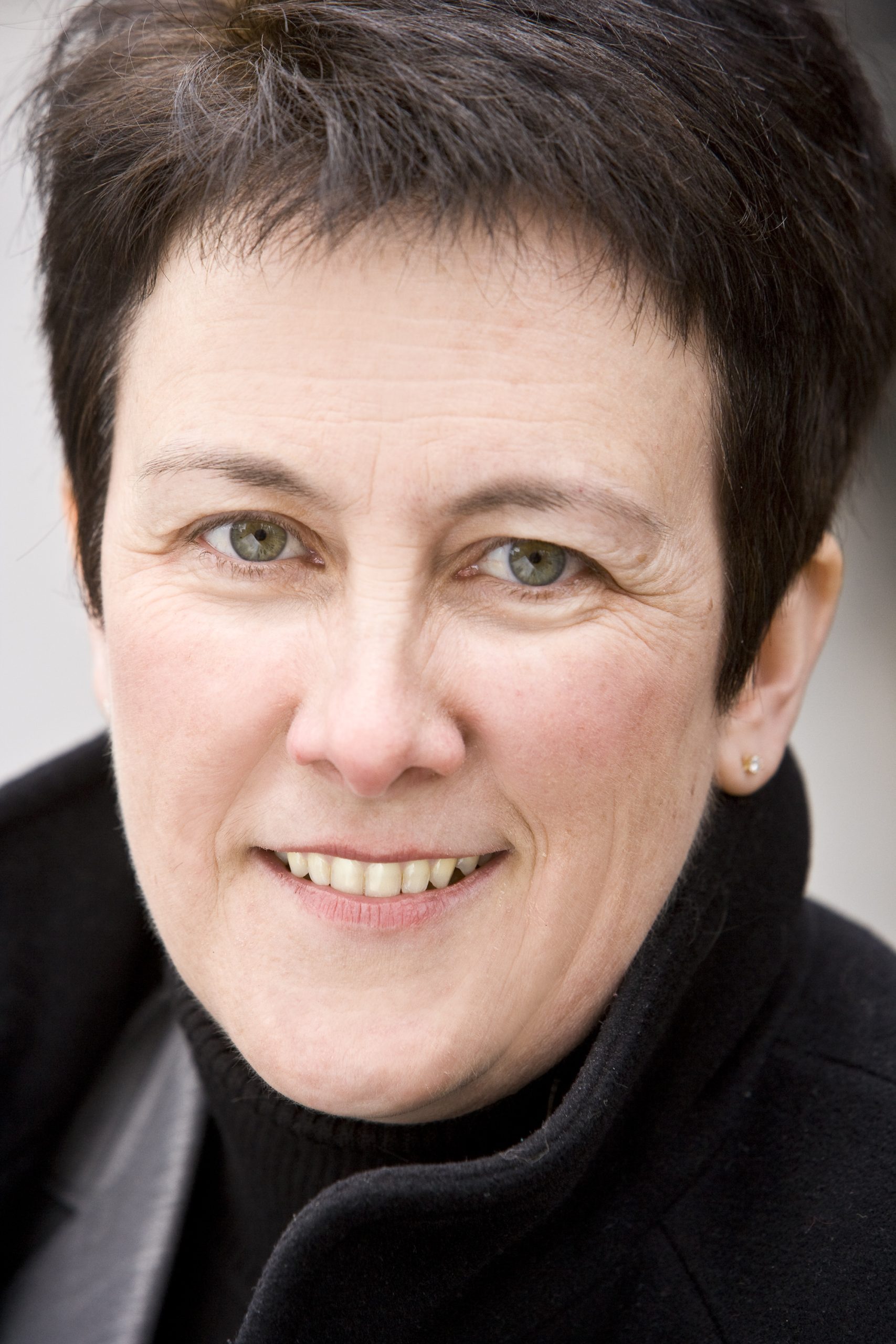
Jennifer Higdon's Cello Concerto for Julian Schwarz
(April 2026)
PHOTO CREDIT: J. Henry Fair
Living Composers of the 24-25 Season
Programming supported by the Voices of Today Initiative

For more information and to purchase tickets for our 25-26 season, visit here!
Kevin Puts - Contact, Triple Concerto for Two Violins, Bass and Orchestra
Season Opener: Tchaikovsky's Fifth | September 21 & 22
James Lee III - Sensational Dynamism: Concerto for Two Pianos and Orchestra
Zarathustra! | November 9 & 10
Lowell Liebermann - Frankenstein Waltzes
Peter and the Wolf | November 23
Anna Clyne - This Midnight Hour
Elgar's Enigma | January 23 & 25
Clarice Assad - Nhanderú
Ravishing Rachmaninov | February 6 & 8
Carlos Simon - Fate Conquers
Emanuel Ax Plays Beethoven | March 1 & 2
Roberto Sierra - Sinfonia Concertante for Oboe, Bassoon, Violin, Cello, and Orchestra
Mozart & Brahms | March 20 & 22
John Adams - Short Ride in a Fast Machine
An American in Paris | May 3 & 4
John Mackey - Redline Tango
The Firebird! | May 31 & June 1